


Every time you press your wall button or click your remote, you expect your garage door to glide open smoothly and quietly. Behind that effortless motion is a complex network of moving parts working in perfect sync. Among the most critical components in this system are the garage door rollers. These small wheels fit into the side tracks, allowing the heavy door sections to transition smoothly from a vertical closed position to a horizontal open position overhead.
When your rollers are in peak condition, your garage system functions flawlessly. However, because they endure immense mechanical stress and constant exposure to the elements, rollers eventually wear out, crack, or seize entirely.
If your door has started making an unbearable racket, shaking violently during operation, or getting stuck halfway up, it is time for professional garage door roller repair. Ignoring these initial warning signs can quickly lead to derailed tracking, broken springs, or a burnt-out opener motor, turning a simple maintenance task into a highly expensive structural repair.
Why Garage Door Rollers Fail
Like any mechanical component under consistent load, garage door rollers have a finite lifespan. In a demanding geographical environment like Chicagoland, that lifespan is often cut short by extreme seasonal weather conditions.
Residential garage rollers are constantly exposed to moisture, intense summer humidity, freezing winter drafts, and drifting dust or road salt. Over time, the internal ball bearings lose their factory lubrication, allowing grit to penetrate the wheel casing. Once this happens, the roller stops rolling smoothly and begins to drag or slide along the metal track channel. This friction creates severe resistance, forcing your automatic opener to pull far more weight than it was designed to handle.
The rate of failure also depends heavily on the specific material of your rollers. Standard builder-grade doors often come equipped with unshielded plastic or cheap steel rollers lacking internal ball bearings. These budget options wear down quickly, frequently cracking or warping after only a few years of consistent residential use.
Critical Signs You Need Garage Door Roller Repair
Catching roller deterioration early can save you from a major mechanical emergency. If you experience any of the following symptoms at your property, your rollers require urgent professional evaluation:
Excessive Shaking or Jerky Movement
If your garage door visibly vibrates, shudders, or jumps as it moves along the radius tracks, the rollers are likely deformed or flattening on one side. A healthy door should travel along its path with minimal lateral deviation.
Loud Screeching, Grinding, or Squeaking Sounds
A loud, harsh metal chattering sound usually indicates that the metal ball bearings have run completely dry or have rusted shut. When a roller seizes, it drags against the track like a car wheel with the brakes locked up, grinding away the zinc coating of your tracks.
The Door Regularly Reverses or Stalls
Modern garage door openers are equipped with built-in safety sensitivity sensors. If a seized roller creates too much resistance along the track, the opener will mistake that friction for an obstruction and automatically reverse the door to protect the motor from burning out.
The Danger of a DIY Roller Replacement
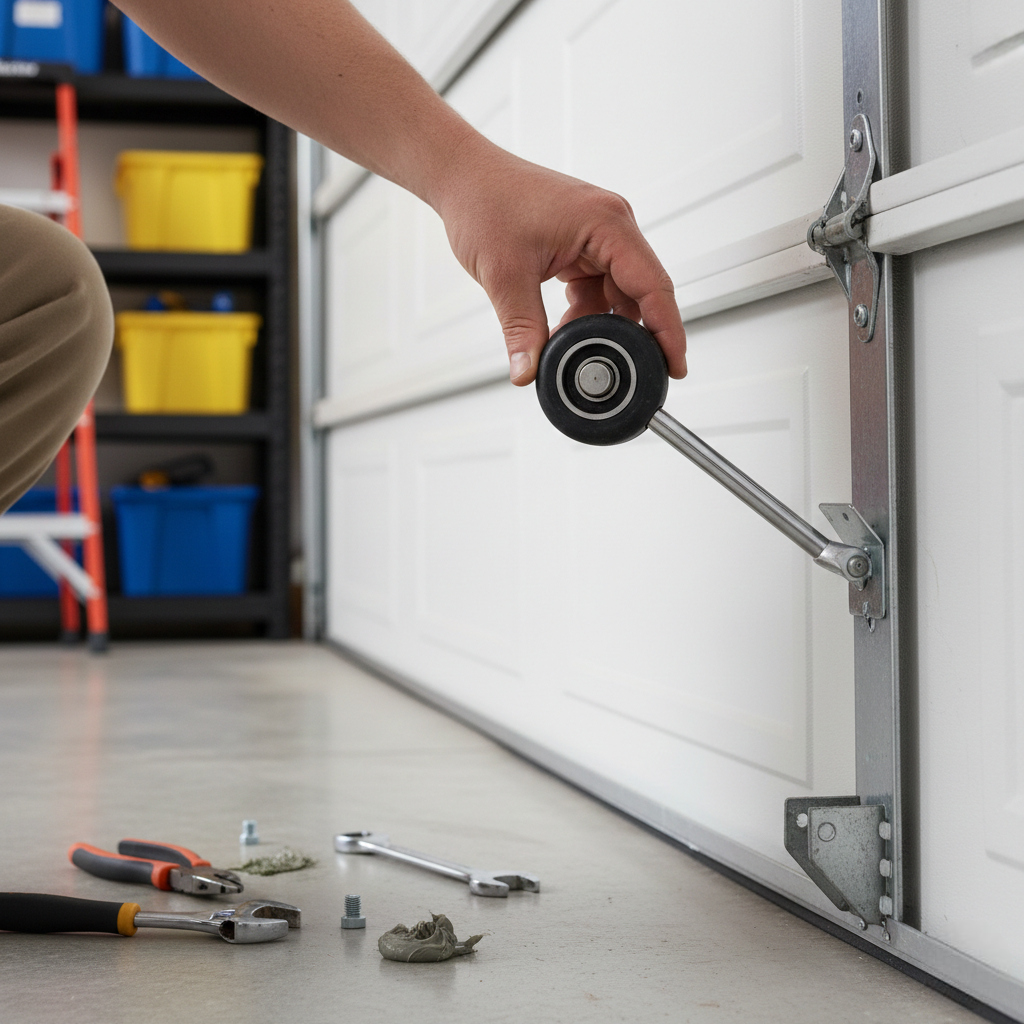
With numerous online video tutorials available, many homeowners are tempted to attempt a DIY garage door roller replacement. This is highly dangerous and strongly discouraged.
While changing out the upper and middle rollers appears relatively straightforward, the bottom roller brackets are entirely different architectural elements. The bottom brackets are permanently fastened directly to the main garage door lifting cables, which are under immense, lethal tension from the overhead torsion spring system.
If you inadvertently loosen the bolts on a bottom bracket without properly un-winding and securing the spring tension first, the bracket can rip away with explosive force. This can slice through fingers, cause severe facial lacerations, or cause the heavy door panel to drop instantly. According to consumer safety warnings from the U.S. Consumer Product Safety Commission (CPSC), high-tension garage hardware adjustments should be handled exclusively by trained professionals who possess specialized winding bars and heavy-duty locking equipment.
Our Professional Roller Repair & Replacement Process
When you partner with our local specialists for your garage door service, we execute a thorough, multi-step restoration protocol to ensure long-term mechanical reliability.
- Comprehensive Balance and Track Inspection: Before touching a single roller, we physically test the balance of your door and check the alignment of your vertical and horizontal steel tracks to ensure the binding isn’t caused by shifted structural framing.
- Spring Tension Lockdown: We utilize specialized locking pliers to secure the door sections safely inside the tracks, eliminating any risk of unexpected movement while components are removed.
- Precision Bracket Removal and Roller Swap: We carefully replace each worn roller one by one, using heavy-duty fixtures to safely manage the bottom fixtures connected to the lift cables.
- System Calibration and Lubrication: Once the new wheels are securely in place, we lubricate the entire assembly using premium, dirt-resistant silicone or lithium spray, never thick grease, which attracts destructive grit. We then fine-tune the opener’s travel limits for smooth operation.
Upgrading to Heavy-Duty Nylon Rollers
If your current garage system relies on noisy steel or fragile plastic wheels, we highly recommend upgrading to premium sealed nylon rollers.
High-performance nylon rollers represent the gold standard of modern residential garage hardware. They feature completely sealed, heavy-duty ball bearings packed with lifetime lubrication, preventing moisture, dust, and winter road salt from penetrating the moving internal parts.
Beyond their incredible durability, often rated for up to 10,000 to 20,000 operational cycles, nylon rollers absorb structural vibrations beautifully. Upgrading to nylon dramatically reduces the operational volume of your door, transforming a loud, rattling overhead system into an ultra-quiet glide that won’t wake up your household when you arrive home late.
Restore Smooth, Quiet Operation with EK Garage Door
Don’t let worn-out, squeaking rollers place unnecessary strain on your expensive automatic opener or compromise your home’s daily accessibility. At EK Garage Door, our factory-trained local technicians bring years of specialized diagnostic experience to every neighborhood across Chicago, delivering fast, safe, and reliable roller repair and premium nylon upgrades. We prioritize your family’s safety, utilize top-tier commercial-grade hardware, and carefully inspect your entire track and spring assembly during every service call to ensure your system runs flawlessly through every Midwestern season. Contact us today to schedule your professional tune-up and experience the quietest door operation on the block.