

You press your remote, the motor hums to life, but instead of your door opening smoothly, the bulb overhead starts blinking on and off and nothing happens. For most Chicago homeowners, this is the first sign that something inside the opener system needs attention.
A blinking opener light is not random. It is a built-in diagnostic signal, and understanding what it means is the fastest way to know whether you are dealing with a simple fix or a deeper issue with your garage door opener.
Below, we walk through what a blinking light typically indicates, the most common causes we see across Cook County homes, and when it is time to bring in a professional technician.
What a Blinking Opener Light Actually Means
Most modern garage door openers, including Chamberlain, LiftMaster, Genie, and Craftsman models, use the bulb near the motor unit as a built-in error indicator. When the opener’s internal logic board detects a fault, whether an obstruction, a wiring issue, or a safety sensor problem, it flashes the light in a specific pattern rather than simply failing silently.
The exact blink pattern and its meaning vary by brand and model, and most manufacturers publish a diagnostic chart in the owner’s manual or on the underside of the motor unit cover. Before assuming the worst, it is worth locating your model number and checking the manufacturer’s specific code chart.
Common Reasons Your Garage Door Opener Light Is Blinking
Misaligned or Obstructed Safety Sensors
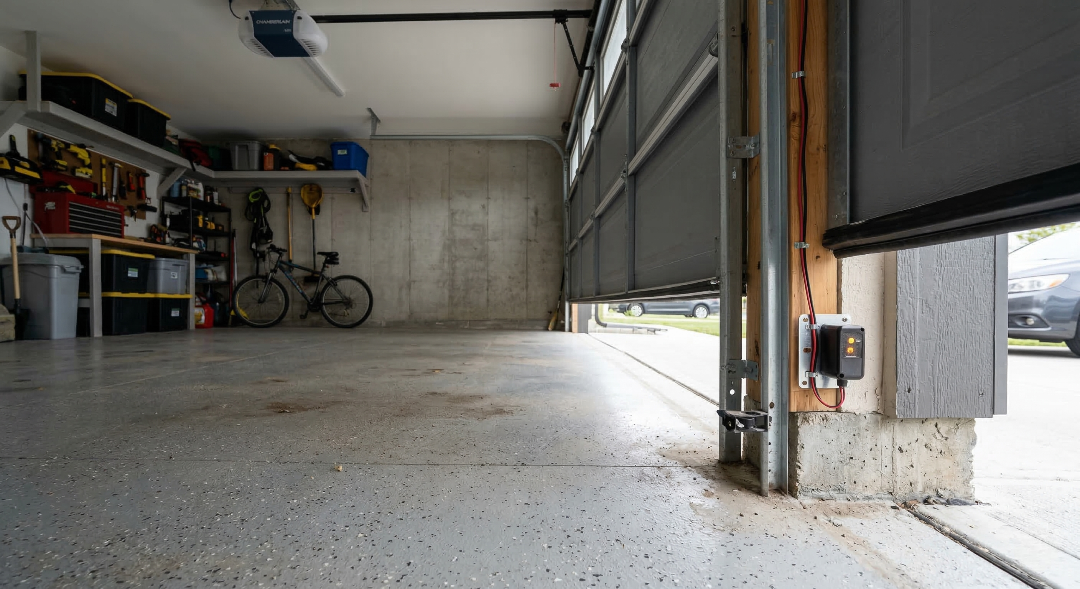
This is, by far, the most frequent cause of a blinking opener light. The two photo-eye sensors mounted near the bottom of the tracks must aim directly at each other to complete a safety circuit. If one sensor has been bumped out of alignment, covered in dust, or blocked by a stray box, the opener will refuse to close the door and signal the fault with a blinking light.
Travel Limit or Force Setting Errors
Every opener is calibrated with travel limits that tell the motor exactly where the door should stop when fully open or closed. If these settings drift over time, often due to seasonal shifts in the door’s weight and balance, the opener may detect an inconsistency and flash an error rather than risk over-traveling the door.
Worn Drive Gear or Circuit Board Failure
Internal components like the drive gear, capacitor, or logic board degrade with age. A blinking light paired with unusual motor sounds or a door that will not move at all often points to a failing internal component rather than a simple sensor issue.
Power Surges and Electrical Interference
A recent storm, a tripped breaker, or a nearby electrical surge can scramble an opener’s internal memory, causing it to flash an error code until the settings are reset or reprogrammed.
How to Read Your Opener’s Blink Code
Start by counting how many times the light flashes in a single sequence before it pauses and repeats. Cross-reference that number with your specific model’s diagnostic chart, usually found in the printed manual or under the motor unit’s light lens cover. If you cannot locate your manual, most manufacturers also maintain a digital copy on their support website using your model number.
The Danger of DIY Sensor and Circuit Adjustments
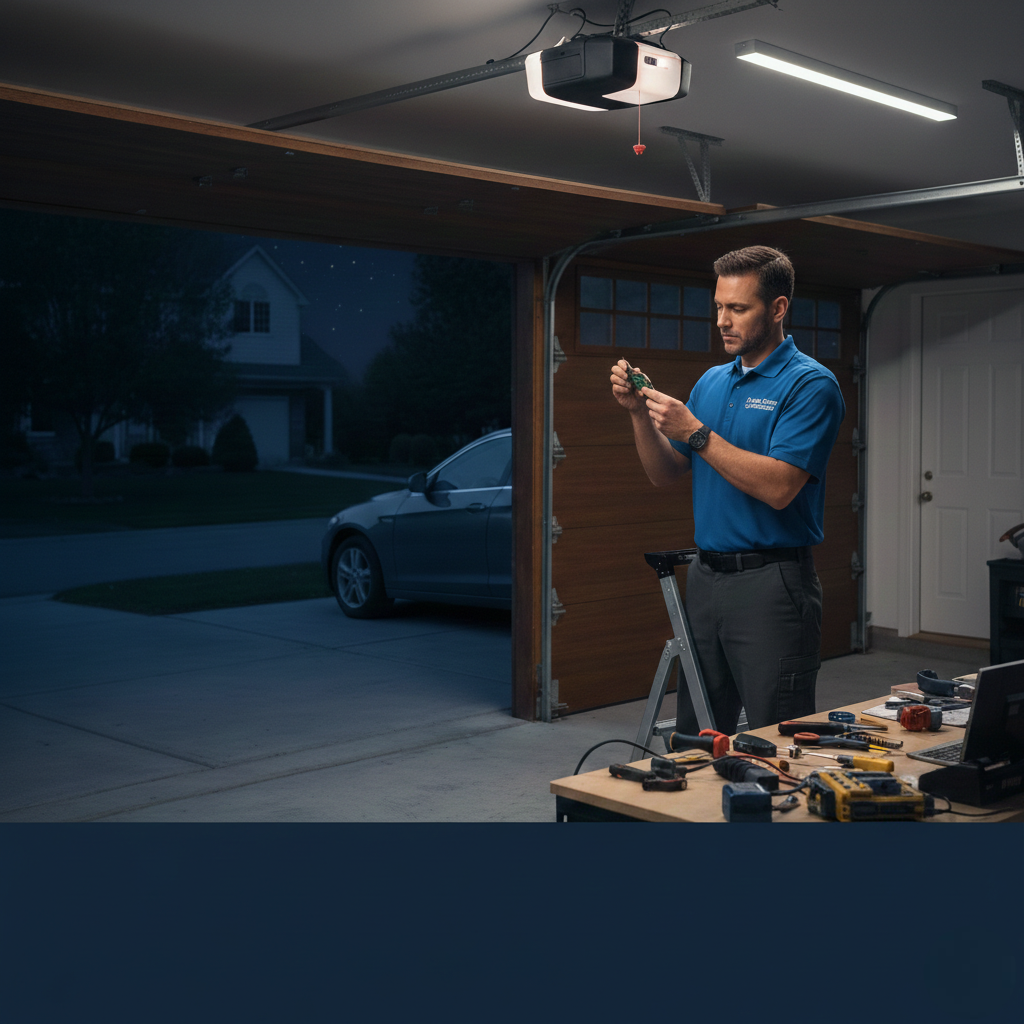
Checking and gently realigning your safety sensors is a task most homeowners can safely handle. However, opening the motor housing, adjusting internal force settings, or attempting to repair a circuit board yourself carries real risk. Incorrect force settings can disable the door’s ability to properly reverse on an obstruction, a critical safety feature. Guidance from the U.S. Consumer Product Safety Commission (CPSC) highlights improperly calibrated safety reversal systems as a recurring factor in residential garage door injuries.
Our Professional Opener Diagnostic Process
- Full Photo-Eye Alignment Check: We inspect and realign both safety sensors, clean the lenses, and confirm a solid, uninterrupted connection.
- Wiring and Connection Inspection: We trace the wiring from the sensors to the motor unit, checking for pinched, corroded, or rodent-damaged wiring common in older Chicago garages.
- Circuit Board and Logic Diagnostic: Using the manufacturer’s diagnostic chart for your specific model, we identify the exact fault code and determine whether it points to a component failure.
- Force and Travel Limit Recalibration: We reset and fine-tune your opener’s settings to match your door’s current weight and balance, resolving false-positive error signals.
When to Upgrade Instead of Repair
If your opener is more than 10 to 15 years old and blinking errors have become a recurring pattern rather than a one-time event, continued repairs may no longer be the most cost-effective option. Modern openers offer more reliable circuit boards, quieter operation, and smart features like smartphone alerts, making a garage opener replacement a smart long-term investment over repeated service calls on an aging unit.
Resolve Blinking Light Issues with EK Garage Door
Do not ignore a blinking opener light or attempt to override the safety system on your own. EK Garage Door provides fast, accurate garage opener repair and safety sensor repair throughout Chicago and Cook County. Our technicians carry diagnostic references for every major opener brand, so we can identify your exact fault code on the first visit. Contact us today to schedule your diagnostic appointment.