Blog

My Garage Door Remote Was Stolen: 4 Steps to Secure Your Home Immediately

Discovering that your vehicle has been broken into is incredibly violating, but that initial shock turns to outright panic when you notice the thief took your garage door remote. If your car was parked in the driveway, on the street outside your home, or even at a nearby commuter lot where your registration card reveals your home address, a stolen garage door remote is the equivalent of handing a burglar a key to your front door.

Most residential entry doors connecting the garage to the kitchen or laundry room are equipped with standard, lightweight locks that are easily bypassed. This makes your garage door the primary vulnerability for home invasions. You cannot afford to wait until tomorrow to address this threat.

Securing your perimeter requires swift, decisive action to ensure that the stolen transmitter becomes completely useless to the criminal who took it.

Step 1: Wipe the Opener’s Memory Instantly

The absolute highest priority is to erase the internal code history of your automatic garage door opener. Every modern opener features a receiver memory that stores the unique radio frequency signatures of every remote control, wireless keypad, and vehicle-integrated transponder paired with the system.

To clear this memory, place a sturdy ladder underneath the overhead motor unit. Remove the light cover or locate the panel containing the operational buttons. Look for a bright button labeled “Learn” or “Smart”, this button is typically colored red, blue, green, orange, or purple depending on the manufacturer and manufacturing date.

Press and hold this button down continuously for approximately six to ten seconds. Watch the small LED indicator light right next to the button; once that light blinks rapidly or goes completely dark, release your grip. By performing this action, you have successfully wiped the system’s brain clean. Any attempt by the thief to click the stolen remote outside your house will result in absolutely nothing happening, effectively neutralizing the immediate entry threat.

Step 2: Manually Lock Down the Physical Door

While clearing the digital memory secures the automated motor unit, sophisticated criminals occasionally attempt to force the actual door panels open manually if they know the property is vulnerable. To prevent this, you should engage a physical mechanical lock immediately.

Look at the interior side rails of your garage door tracking system. Most standard track installations feature a spring-loaded slide lock mechanism mounted on either the left or right vertical track. Slide the heavy metal bolt all the way through the tracking slot to physically pin the roller wheel in place.

If your door lacks a manual slide lock, you can achieve the exact same mechanical security by taking a heavy-duty locking C-clamp or a pair of locking pliers (Vise-Grips) and clamping them tightly onto the vertical metal track directly above one of the roller wheels.

Critical Safety Warning: If you choose to engage a physical slide lock or clamp, you must immediately unplug the automated overhead motor unit from the ceiling electrical outlet. If anyone inadvertently presses a wall button while the door is physically locked down, the motor will try to lift the immense weight against an unyielding steel bar, which can twist your tracks out of alignment, snap your cables, or destroy the motor gears completely.

Step 3: Deprogram Vehicle Integrations and Reprogram New Devices

Once the immediate threat is mitigated, you can begin the process of safely restoring daily functionality to your household. Because Step 1 wipes the entire receiver memory, all of your legitimate remotes, exterior keypads, and built-in vehicle buttons (such as HomeLink or Car2U systems) will no longer operate the door.

Take your remaining physical remotes and your exterior keypad back up the ladder to the motor unit. Press the “Learn” button briefly for one second until the indicator light illuminates solidly, then immediately press the operational button on your remote control. The main overhead work light will flash once, confirming that the new, completely different rolling code has been successfully recorded.

Repeat this distinct process for every individual device you own. For vehicles with built-in transceiver systems, consult the automobile owner’s manual to clear out old frequencies before syncing the car back up to the freshly wiped garage receiver. According to home security safety analysis from the Federal Bureau of Investigation (FBI), securing secondary residential portals like garages significantly lowers the overall statistical probability of opportunistic target selection by burglars.

Step 4: File an Official Police Report and Audit Vehicle Documents

A stolen remote control should never be treated as a simple lost item; it is an active criminal incident. Contact your local police department’s non-emergency line to file an official report documenting the vehicle break-in and the specific theft of the automated entry device.

When filing the report, be sure to note whether your vehicle registration card or insurance paperwork was stored in the glove box or console. Criminals frequently target these documents because they display your home address alongside your full name. If these papers were taken, the police need to know that the thieves have a direct roadmap leading straight to your residence.

Additionally, take this opportunity to clean out your vehicle. Moving forward, make it an absolute household rule to treat your garage door remote like a physical house key. Avoid clipping it openly to the driver’s side sun visor where it remains highly visible through the glass windows. Instead, store it out of sight in a hidden center console, or transition over to an ultra-compact keychain remote that leaves the vehicle whenever you do.

Prevent Future Vulnerabilities with Smart Garage Upgrades
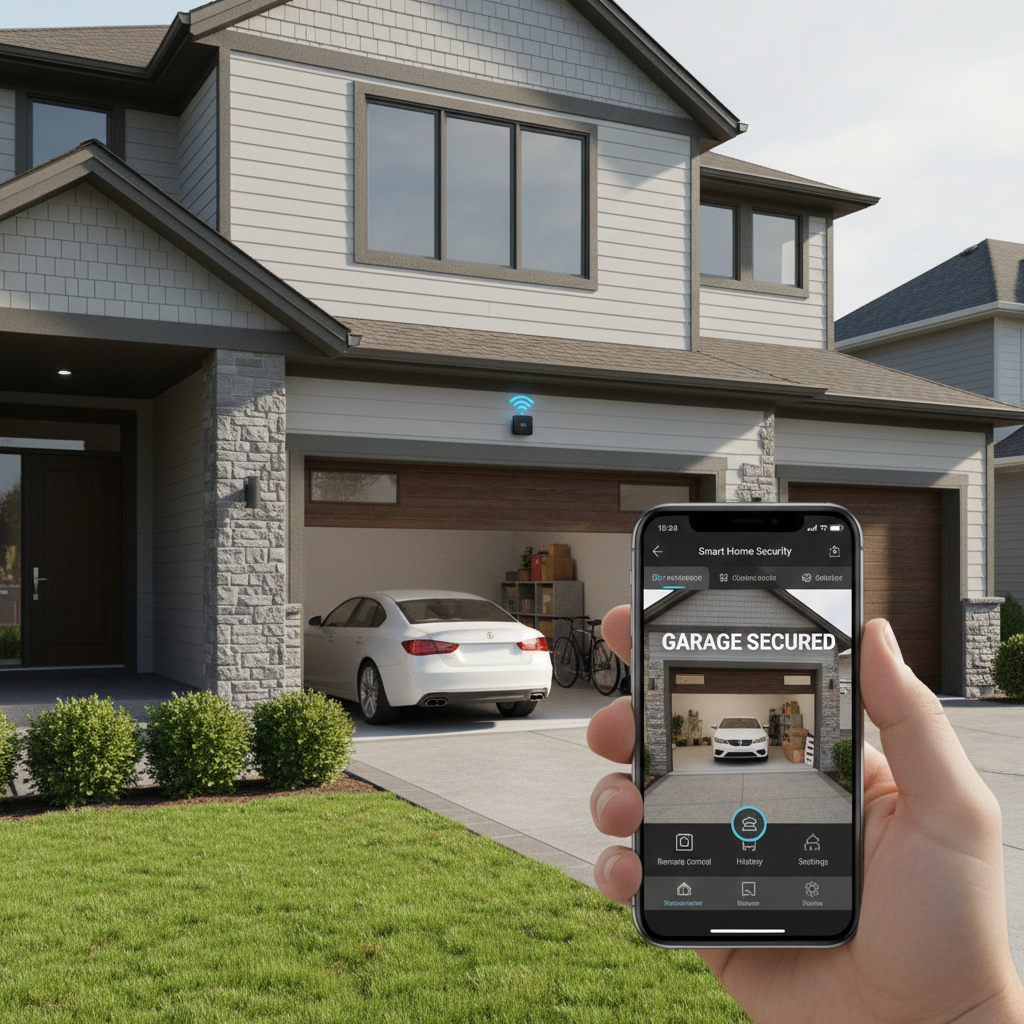
A person holding a smartphone in the foreground displaying a "GARAGE SECURED" notification with a live camera feed of their garage, while the actual house and open garage are visible in the background.

If your garage door opener is older, a stolen remote scenario is a fantastic catalyst to upgrade to a smart garage ecosystem. Modern Wi-Fi-enabled smart openers bypass traditional physical radio remotes altogether by utilizing encrypted smartphone applications for entry.

With a smart system, you receive real-time push notifications on your phone the exact second your garage door opens or closes. You can set automated schedules to ensure the door closes itself every night by a specific hour, and you can instantly revoke access permissions digitally from anywhere in the world without ever climbing a ladder. Taking these proactive technological steps transforms your garage from a vulnerable security weak point into a highly defended, intelligent perimeter.

Secure Your Peace of Mind with EK Garage Door

Experiencing a theft is stressful, but you don’t have to navigate your home’s security recovery alone. The dedicated professionals at EK Garage Door are ready to assist you with comprehensive emergency security audits, complete receiver reprogramming, and high-security hardware installations. Whether you need to replace compromised remotes, install robust mechanical side locks, or upgrade your home to a secure, modern smart opener system, our experienced local technicians provide fast, reliable support when you need it most. Check out our comprehensive structural safety options on our EK Garage Door Services Page or get in touch with our team today to ensure your home remains completely safe and secure.

Why is My Garage Door Opener Making a Grinding Noise?

Few household sounds are as disruptive or immediate cause for concern as a sudden, harsh mechanical groan coming from your ceiling. When you press the remote control button and hear a distinct grinding noise from your garage door opener, it is a clear warning sign that something within your overhead system is failing.

Ignoring this sound rarely ends well. What begins as an annoying racket can rapidly escalate into a completely seized opener, a trapped vehicle, or a dangerous mechanical failure. If your motor is running but the door isn’t moving, or if it moves with severe shuddering and a sound like metal teeth tearing apart, you need to understand exactly what is happening under the chassis.

Diagnosing the precise cause of the grinding noise is the first step toward restoring safety and smooth functionality to your home.

The Most Common Culprit: Stripped Drive Gears

By far, the most frequent reason an automatic opener begins grinding is a stripped gear and sprocket assembly. Inside the main motor casing of most residential chain-drive and belt-drive openers sits a small, white nylon drive gear. This gear interlocks directly with a metal worm gear on the motor shaft to turn the sprocket that drives the chain or belt forward.

Because these internal gears are intentionally made of nylon or plastic, they act as a sacrificial mechanical safeguard. If the garage door becomes too heavy or meets an obstruction, the plastic teeth will strip away to prevent the electric motor itself from burning out.

Over a decade of constant lifting, or due to a sudden imbalance, these plastic teeth flatten down completely. When the motor turns, the metal worm gear slips helplessly against the smooth, shredded plastic, creating a loud, unmistakable grinding sound while the garage door remains completely stationary.

Root Causes Behind Internal Gear Failure

While the nylon gear is what breaks, it is rarely the initial cause of the problem. A stripped gear is almost always a secondary symptom of an underlying issue that forced the opener to lift far more weight than it was ever engineered to handle.

Out-of-Balance Garage Door Springs

A common misconception is that the electric opener does the heavy lifting to open a garage door. In reality, the heavy lifting is done entirely by the torsion or extension counter-balance springs. When a garage door is properly balanced, you should easily be able to lift it halfway open with one hand, and it will stay in place.

Over time, steel springs lose their tension, or a single spring snaps due to metal fatigue. When this happens, a door that should feel like it weighs ten pounds suddenly weighs a dead-weight two hundred pounds. The electric opener tries to muscle through the immense load, placing severe structural pressure on the internal nylon drive gear until its teeth shear off completely.

Lack of Professional Track and Roller Lubrication

Dry, rusted tracks or seized steel rollers create immense friction. As the garage door attempts to glide up the vertical and horizontal radius tracks, the rollers bind against the metal casing. This binding creates a jerky movement that sends shockwaves back along the drawbar to the drive carriage, grinding down the opener components prematurely. According to consumer safety guidelines from the U.S. Consumer Product Safety Commission (CPSC), maintaining smooth mechanical operation is vital not only for the longevity of the appliance but also to ensure that built-in safety reversal systems operate effectively.

Other Potential Sources of the Grinding Sound

If your internal motor gears appear intact upon initial inspection, the abrasive sound could be originating from other moving components along the rail assembly.

Worn Out Chain or Belt Drive Sprockets

At the very top of the motor unit, the drive chain or reinforced rubber belt wraps around a metal sprocket. If the chain is severely loose and sagging, it can slip off the alignment guide and grind against the edges of the metal housing. Over time, an over-tightened or unlubricated chain can also grind down the teeth of the top sprocket gear itself, producing fine metal shavings and a harsh metallic chattering sound whenever the trolley passes by.

Failing Bearings Inside the Motor Casing

High-end garage door openers utilize sealed bearings to allow the motor shaft to spin smoothly at high speeds. If the seals fail, moisture and ambient debris penetrate the housing, drying out the internal grease. Once the bearings run dry, the metal-on-metal friction produces a high-pitched, continuous grinding or roaring hum whenever the motor receives electrical current.

The Danger of Operating a Grinding Opener

When an opener starts grinding, many homeowners are tempted to keep pressing the button in hopes that the system will miraculously clear itself. This is highly dangerous.

If you continue running a malfunctioning motor, you risk melting the internal wiring harnesses, destroying the main circuit control board, or snapping the drive chain. Furthermore, if the noise is caused by a broken spring, the entire weight of the door is unmanaged. If the trolley mechanism suddenly shears off while the door is partially open, the heavy panel will come crashing down like a guillotine, threatening catastrophic injury or severe property damage.

Immediate Troubleshooting Steps for Homeowners

If you hear a grinding noise, immediately stop using the wall button or remote clicker and follow these safe troubleshooting steps:

  1. Pull the Emergency Release Cord: Locate the red cord hanging from the trolley assembly on the center rail. Pull it straight down to disconnect the garage door from the automatic opener carriage.
  2. Test the Door Balance Manually: Grip the lift handle at the bottom of the door and carefully raise it manually. If the door feels incredibly heavy or refuses to stay open at the midpoint, your springs are failing or out of balance.
  3. Visually Inspect the Internal Housing: Unplug the opener from the ceiling electrical outlet. Remove the plastic outer light cover and the metal chassis casing screws. Look inside for a pile of white, snowy plastic shavings directly underneath the main drive gear—this is definitive proof of a stripped gear assembly.

Professional Repair vs. Complete Opener Replacement

Fixing a grinding noise generally comes down to two options: installing an internal gear and sprocket rebuild kit, or replacing the entire automated unit.

If your opener is a high-quality model less than seven years old, a professional technician can easily pull the motor shaft, replace the worn nylon gears, apply fresh silicone grease, and re-balance your springs for a highly cost-effective repair. However, if your opener is an older model utilizing obsolete security frequencies or lacking modern safety eyes, investing money into a rebuild is rarely wise. Upgrading to a modern, ultra-quiet belt-drive or direct-drive smart system provides a much safer, more reliable long-term solution for your home.

Schedule Expert Diagnostics with EK Garage Door

Don’t let a noisy garage door opener leave your home vulnerable or strip away your daily convenience. At EK Garage Door, our highly trained technicians specialize in rapid diagnostic assessments, precision gear rebuilds, and comprehensive spring balancing to eliminate harsh grinding noises at the source. We stock our trucks with top-tier OEM parts to fix your system safely in a single visit. Visit our EK Garage Door Services Page or reach out directly today to schedule a prompt repair appointment and restore quiet, smooth operation to your home.

Modern Glass Garage Doors: Are They Practical for Chicago Climates?

When it comes to boosting your home’s curb appeal, few architectural upgrades make a statement quite like a modern glass garage door. The clean lines, contemporary aesthetics, and flood of natural light can completely transform a home’s exterior. However, for homeowners living in the Chicagoland area, aesthetic appeal is only half the battle.

Chicago weather is notoriously brutal. With blistering summer humidity, fierce autumn winds off Lake Michigan, and freezing winter blizzards that drop temperatures well below zero, every exterior element of your home must be built to withstand extreme thermal fluctuations. This reality leaves many local homeowners asking a critical question: Are modern glass garage doors actually practical for Chicago climates?

The short answer is yes, but only if you choose the right materials, insulation ratings, and structural engineering. Let’s dive deep into how glass full-view garage doors perform under pressure in the Windy City.

The Cold Reality: Thermal Efficiency and Insulation

A medium shot photo shows a middle-aged man in a work shirt, gloves, and jeans, unrolling and cutting a large roll of reflective foil-bubble insulation material in a garage.

The primary concern with any glass installation is heat loss. In a traditional garage door, thick layers of polyurethane or polystyrene insulation keep the freezing winter air out and the warmth inside. Glass, by its nature, is a highly conductive material, meaning it transfers heat quickly.

If you install a standard, single-pane glass garage door in a Chicago home, your garage will essentially become a refrigerator by December. This is especially problematic if you have an attached garage, as the cold air will seep through the shared walls and entry doors, forcing your home’s HVAC system to work overtime and driving up your utility bills.

To combat this, modern engineering relies on advanced glazing techniques. When choosing a glass door for a Midwestern climate, insulated glass is non-negotiable. Look for double-pane or even triple-pane glass options that feature an airtight space between the layers. This space is often filled with inert gas, like argon, which acts as a powerful thermal barrier.

Additionally, pay attention to the frame. A high-quality aluminum frame should feature thermal breaks, insulated barriers built inside the frame structure that prevent the freezing outside cold from conducting through the metal into your garage space.

Withstanding the Windy City: Durability and Safety

Chicago didn’t earn its nickname solely from politics; the wind speeds coming off the lake are formidable. When a severe thunderstorm or a winter gale hits Cook County, your garage door acts as a giant sail. If the door fails structurally, the resulting pressure change can cause catastrophic damage to the rest of the garage structure.

Many homeowners worry that a glass door is inherently fragile. Fortunately, architectural glass engineering has advanced dramatically. Practical glass garage doors utilize tempered safety glass or laminated glass. Tempered glass is heat-treated to be up to four times stronger than standard glass. In the rare event that it does break, it fractures into small, blunt pebbles rather than sharp, dangerous shards.

Furthermore, premium manufacturers build these doors with heavy-duty, reinforced aluminum tracks and commercial-grade hardware. This heavy-duty underpinning ensures that the door meets strict local building codes for wind load resistance, giving you peace of mind during severe weather events.

Maximizing the Benefits: Light, Versatility, and Value

While navigating the climate requires careful planning, the benefits of a properly specified glass garage door are immense.

Unmatched Natural Light

The most immediate advantage is the influx of daylight. If you use your garage as a workshop, a home gym, or an art studio, natural light completely changes the usability of the space. It reduces the need for harsh overhead artificial lighting and makes the area feel like a seamless extension of your living quarters.

Privacy Without Sacrificing Style

If you are worried about neighbors seeing your vehicles or stored belongings, you do not have to stick to clear glass. Homeowners can choose from frosted, tinted, satin, or mirrored glass options. These choices allow maximum light transmission into the space while completely obscuring the view from the street.

Increased Property Value

Curb appeal directly correlates with property valuation. In competitive real estate markets across Chicago neighborhoods, standout modern architecture commands a premium. A striking glass facade sets your home apart from standard suburban builds, offering a strong return on investment.

Maintenance in a Four-Season Climate

Every season in Chicago brings a different environmental challenge. In the spring and summer, pollen and dust settle on the exterior. In the winter, road salt kicks up from the driveway and leaves a hazy residue on the lower panels.

Maintaining a glass door does require more regular cleaning than a standard steel or wood-composite door. However, the process is straightforward. Wiping down the panels with a mild, non-abrasive soap or a standard glass cleaner a few times a year keeps the door looking pristine.

More importantly, the mechanical components require seasonal oversight. Because glass assemblies can be heavier than basic uninsulated steel doors, your garage door springs, rollers, and cables experience consistent tension. Regular professional maintenance is vital to ensure the balance of the door remains perfect, preventing premature wear on your garage door opener. You can learn more about proper structural guidelines and safety requirements by reviewing the official standards provided by the U.S. Department of Energy regarding home envelope insulation.

Making the Right Choice for Your Chicago Home

Ultimately, a modern glass garage door is a highly practical choice for a Chicago home, provided you do not cut corners on specifications. Investing in double-pane insulated glass, thermally broken aluminum frames, and robust wind-load hardware transforms these doors from a seasonal liability into a durable, year-round asset.

When you partner with experienced local installers who understand the precise demands of Illinois weather, you can safely enjoy the jaw-dropping architectural benefits of a modern glass door without sacrificing comfort or energy efficiency.

Upgrade Your Curb Appeal with EK Garage Door

If you are ready to elevate your home’s exterior with a stunning, climate-ready glass installation, the team at EK Garage Door is here to help. We specialize in sourcing and installing premium, highly insulated modern glass doors specifically engineered to withstand the toughest Chicago winters and storm seasons. Our expert technicians ensure precise calibration and robust weatherproofing so your new door performs beautifully year after year. Contact us today to schedule a professional consultation and request a custom estimate for your home.


Trapped Car? What to Do in a Chicago Garage Door Emergency

There are few residential mishaps more stressful than rushing out the door for your morning commute, pressing your garage door remote, and hearing nothing but a hollow click or a straining motor. Whether you are heading to an important meeting downtown, trying to beat rush-hour traffic on the Kennedy Expressway, or rushing to catch a flight at O’Hare, a trapped car turns a normal day into an immediate household emergency.

When a garage door mechanical failure traps your vehicle inside, it can be tempting to use raw physical force to solve the problem. However, because garage doors operate under extreme mechanical tension, hasty actions can result in devastating injuries, permanent property damage, or a completely ruined automated opener. Knowing exactly how to assess the situation safely, override the system manually, and when to call in professional reinforcements is the key to resolving a garage door crisis without making a stressful situation much worse.

Why Is Your Car Trapped? Identifying the Root Cause

Before attempting to move the door, it helps to understand why it refuses to open. Identifying the root cause of the failure can prevent you from causing secondary, more expensive damage to the door’s tracking and motor systems.

1. A Broken Torsion or Extension Spring

The most common culprit behind a suddenly immobilized garage door is a snapped spring. Many homeowners believe the electric opener does the heavy lifting, but the springs actually counterbalance the massive weight of the door. When a spring snaps, often accompanied by a loud, gunshot-like bang, the door instantly becomes dead weight, weighing anywhere from 150 to over 400 pounds. Attempting to lift a door with a broken spring manually is incredibly difficult and highly dangerous.

2. Snapped or Slipped Cables

Garage door cables work in tandem with the springs to pull the door upward. If a cable frays and snaps, or if it slips off its designated drum assembly, the door will lose its lifting tension entirely. This often causes the door to hang at a dangerous, crooked angle within the vertical tracks, completely jamming the rollers.

3. Misaligned or Obstructed Photo-Eye Sensors

If your garage door opener clicks and the light bulb flashes but the door refuses to budge or moves down an inch and reverses, your safety photo-eyes are likely compromised. These small infrared sensors sit a few inches off the ground on both sides of the door track. If they are bumped out of alignment, covered in Chicago winter road salt grime, or blocked by a rogue garbage can, they signal the system that an object is in the path, locking down automated operation.

Step-by-Step Guide: How to Safely Override the System

A concerned woman talks on her cell phone and gestures toward a severely buckled and collapsed wooden garage door while a repair technician stands nearby holding tools.

If your vehicle is stuck inside and the tracking system appears straight and undamaged, you can attempt to manually open the door using the safety release mechanism. Follow these safety protocols precisely to avoid dropping the door onto your vehicle or yourself.

Step 1: Ensure the Door is Fully Closed

Never pull the emergency release cord if the garage door is partially open. If a spring or cable is broken, the only thing keeping that heavy door suspended is the electric opener carriage. Pulling the release cord while the door is open will cause it to crash down violently like a guillotine, instantly crushing anything underneath it and presenting a severe hazard as tracked by the U.S. Consumer Product Safety Commission (CPSC).

Step 2: Pull the Red Emergency Release Cord

Locate the red cord with a plastic handle hanging down from the automated opener’s trolley track. Pull this handle straight down and back toward the motorized unit. This action disengages the internal locking pin connecting the door arm to the automated chain or belt drive, placing the garage door into manual mode.

Step 3: Attempt a Controlled Manual Lift

Stand in the center of the door, bend your knees, and lift using the designated handles on the interior panels. If the springs are intact, the door should slide upward with relatively little effort. Lift it all the way to the top of the tracks until it stops.

Step 4: Secure the Door Before Moving Your Car

Do not assume the door will stay open on its own. If the tracking system is worn or if a spring is starting to fail, gravity can pull it back down unexpectedly. Before backing your car out of the garage, secure the door in the fully open position. You can clamp a pair of locking pliers (Vise-Grip) onto the metal track directly beneath one of the rollers to mechanically block the door from sliding downward. Once secured, carefully back your vehicle out into the driveway.

What Not to Do During a Garage Door Emergency

When time is running out, panic can cloud your judgment. Avoid these dangerous mistakes at all costs:

  • Do Not Use Your Car to Force the Door Open: It may sound obvious, but some homeowners attempt to nudge a stuck door open with their vehicle’s bumper. Modern garage doors and car bumpers are not built to withstand this kind of blunt force; you will end up with thousands of dollars in vehicular body damage and a completely destroyed garage door structural frame.
  • Do Not Keep Pressing the Remote Button: If the door is jammed or a spring is broken, repeatedly pressing the wall button will simply burn out the electric motor’s internal capacitors or completely strip the main drive gear inside the housing.
  • Do Not Attempt DIY Spring Adjustments: Torsion springs hold enough kinetic energy to snap like a whip, causing severe lacerations or fractures. For safety guidelines regarding complex residential machinery and high-tension components, consult engineering standards managed by organizations like the National Institute of Standards and Technology (NIST).

Preventative Measures to Avoid Future Lockouts

The best way to manage a garage door emergency is to prevent it from happening in the first place through routine structural care.

First, perform a monthly balance check. Put the door in manual mode and lift it halfway up; a perfectly balanced door will stay suspended in place. If it falls or shoots upward, the spring tension is incorrect and needs immediate professional calibration. Second, keep the mechanical hardware thoroughly lubricated. Applying a high-quality silicone or lithium-based spray to the rollers, hinges, and springs twice a year reduces friction and prevents early metal fatigue. Finally, schedule a comprehensive annual maintenance tune-up with a certified technician to catch fraying cables and weakening springs before they completely fail.

24/7 Emergency Garage Door Repair in Chicago

When your car is trapped and your schedule is on the line, you don’t have time to wait days for a standard repair appointment. The professional team at EK Garage Door understands that a broken garage door is a security risk and an immediate logistical nightmare. Our certified, highly experienced technicians are fully equipped with specialized tools and heavy-duty replacement springs and cables to handle any residential emergency safely and efficiently. We provide rapid, reliable emergency dispatch across the entire Chicago metropolitan area to get your door operational and your vehicle freed in record time. Do not compromise your safety by battling a heavy, malfunctioning door alone, contact us today for immediate, expert assistance.