

In the complex ecosystem of a modern Chicago home, the garage door is often the largest and heaviest moving object. While we admire the aesthetic of a new carriage-style door or the quiet hum of a belt-drive opener, the most critical component is arguably the most discreet: the garage door safety sensors. Often referred to as “photo-eyes,” these small devices are the primary defense against entrapment and injury. At EK Garage Door, we have seen how these sensors prevent thousands of accidents annually in the Chicagoland area. Understanding the mechanics, legal requirements, and maintenance needs of your sensors is essential for every responsible homeowner.
The Technology of the Beam: How Photo-Eyes Operate
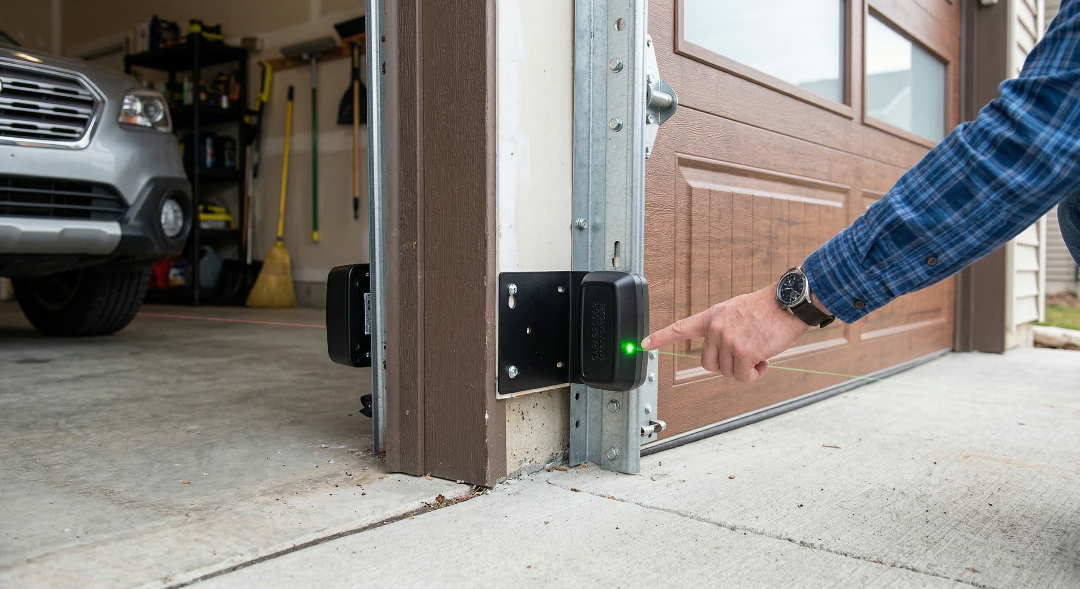
Garage door safety sensors function using an infrared light beam, a spectrum of light invisible to the human eye. The system consists of two distinct units: a transmitter (sending sensor) and a receiver (receiving sensor). The transmitter projects a continuous infrared beam across the width of the garage door opening. As long as the receiver detects this uninterrupted signal, the garage door opener “acknowledges” that the path is clear.
If an object, person, or pet breaks this beam while the door is in its closing cycle, the circuit is interrupted. The opener’s logic board immediately triggers a reversal protocol, halting the downward motion and returning the door to its fully open position. This reaction occurs in a fraction of a second, significantly faster than a human could manually react to an emergency.
Why Placement and Calibration Are Critical
For a safety sensor system to be effective, its physical positioning must adhere to strict guidelines. According to the U.S. Consumer Product Safety Commission (CPSC), sensors must be installed no higher than six inches above the garage floor. This specific height is designed to detect small children or pets who might be lying down or crawling through the opening, as well as lower-profile objects like tricycles or storage bins.
In addition to height, alignment is the cornerstone of sensor health. Even a slight vibration from the garage door’s operation or a minor bump from a trash can can knock the sensors out of “true.” When this happens, the receiver loses the signal, and your door will likely refuse to close at all, often accompanied by a clicking sound or flashing lights from the opener motor. This “fail-safe” mode is an intentional design feature: if the sensors cannot confirm the path is clear, the door is programmed not to move.
Legal Standards and UL 325 Compliance
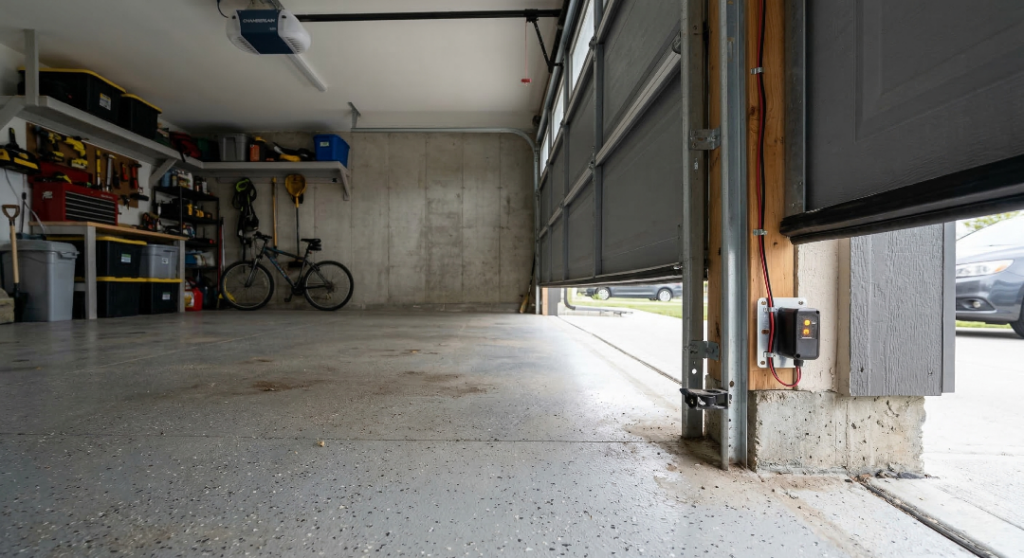
Safety sensors are not just a recommended feature; they are a federal mandate. Since 1993, the CPSC has required all residential garage door openers manufactured or installed in the United States to be equipped with an external entrapment protection device. This regulation is codified under the UL 325 safety standard, which is regularly updated by Underwriters Laboratories to reflect new technological advancements.
As of the latest 2023 and 2024 revisions to the UL 325 standards, these systems must be “monitored.” This means the garage door opener must constantly check that the sensors are connected and functional. If a wire is cut or a sensor is removed, the opener will disable its closing function. For Chicago homeowners with older systems (pre-1993), upgrading to a modern, compliant opener is a vital step in reducing liability and ensuring the safety of everyone on the property.
Troubleshooting Common Sensor Disruptions
Because sensors are located near the ground, they are highly susceptible to environmental factors. Before calling for a professional repair, there are several “soft” issues that homeowners can address:
- Lens Contamination: In Chicago, dust, spiderwebs, and salt spray from the winter streets can coat the lenses. Gently wiping the sensors with a soft, microfiber cloth often restores the signal.
- Sunlight Interference: Known as “glare,” direct sunlight hitting the receiving lens can “blind” the sensor, tricking it into thinking the beam is broken. Adding a small cardboard shroud or slightly adjusting the angle can often resolve this.
- Wiring Integrity: Garage door wires are low-voltage and can be easily damaged by rodents or gardening tools. Inspecting the wire leads for frays or loose connections at the sensor head is a standard part of a home safety check.
The Economic and Safety Value of Professional Maintenance
While basic cleaning is a DIY task, the calibration of the auto-reverse system should be handled by an expert. During a professional inspection at EK Garage Door, we don’t just check if the beam works; we perform a force-sensitivity test. This ensures that even if the sensors were to fail, the door’s internal “contact” sensors would still reverse upon touching an object.
Regular maintenance also extends the life of your motor. When sensors are misaligned, homeowners often “force” the door shut by holding down the wall button. This bypasses the safety system and puts unnecessary strain on the opener’s gears and drive belt. According to the National Institute of Standards and Technology (NIST), preventing mechanical strain through proper sensor alignment is a key factor in maximizing the ROI of home appliances.
Ensure Your Family’s Safety with a Professional Audit
A malfunctioning safety sensor is more than just a minor inconvenience, it is a significant safety risk that leaves your home and family vulnerable. Whether your door is reversing unexpectedly, or you are concerned that your older system doesn’t meet the latest UL 325 compliance standards, the team at EK Garage Door is here to help. We specialize in precision sensor alignment, modern opener upgrades, and comprehensive safety inspections tailored to the unique architectural needs of Chicago. Don’t leave your safety to chance; let our expert technicians verify that your “invisible guardian” is standing watch as it should. Contact us today at (312) 860-1171 to schedule your professional safety sensor inspection, take the first step in making your garage the safest part of your home.