

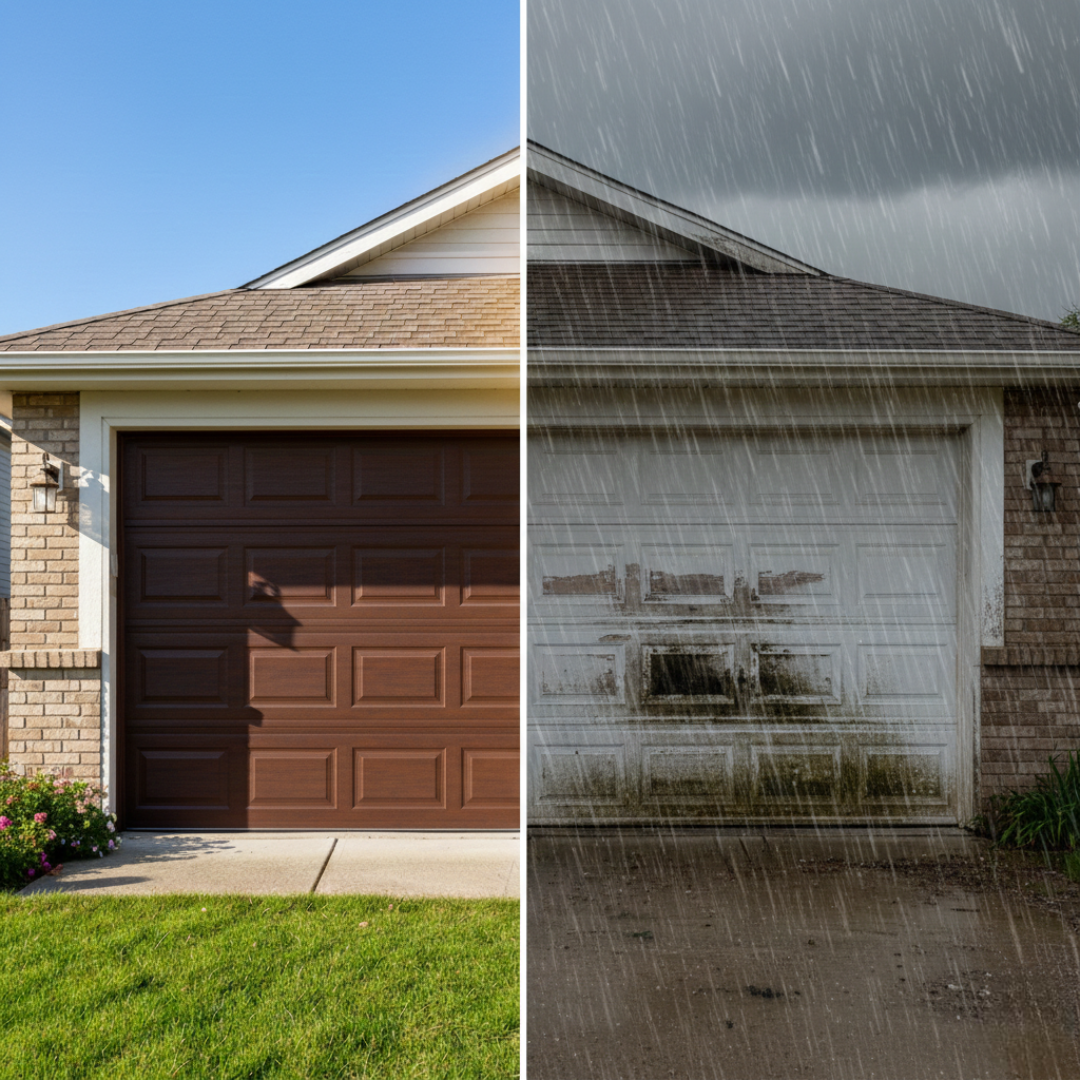
Chicago is world-renowned for its architectural beauty, but for homeowners, the city’s climate is a relentless adversary. From the humid, heavy air of a Lake Michigan summer to the brutal “Polar Vortex” winters, your garage door is on the front lines of every seasonal shift. Unlike interior doors, your garage door is a massive mechanical system that expands, contracts, and corrodes based on the forecast. At E.K. Garage Door, we have spent years studying how Chicago’s unique microclimates affect different door materials and components. Understanding these environmental stressors is the first step in ensuring your door remains functional and safe for years to come.
Winter: The Season of Mechanical Stress
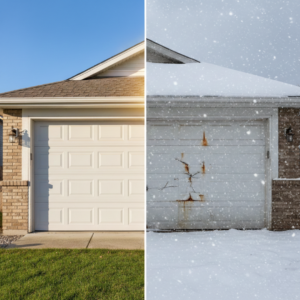
In Chicago, winter isn’t just a season; it’s a mechanical stress test. When temperatures plummet below freezing, the physics of your garage door changes almost overnight. Metal components, including the torsion springs, tracks, and rollers, contract in the cold. This contraction can cause the door to bind in the tracks or put excessive strain on the opener motor as it tries to lift “stiff” hardware.
Why Springs Snap in the Cold
The most common emergency call we receive during a Chicago cold snap is for a broken spring. Metal becomes more brittle at low temperatures. When a spring that is already near the end of its life cycle is forced to lift a heavy door in sub-zero weather, the internal tension often exceeds the metal’s threshold, resulting in a loud “bang” and a door that won’t move. According to safety guidelines from the U.S. Consumer Product Safety Commission (CPSC), a failed spring can make a door a falling hazard, which is why we emphasize winter-ready inspections.
The Corrosive Duo: Road Salt and Melted Snow
Chicago’s commitment to clear roads means tons of salt are spread across the city. As you drive your vehicle into the garage, that salt-laden slush melts and settles into the bottom of your garage door panels, hinges, and cables. This creates a highly corrosive environment. Salt accelerates the oxidation process, leading to orange rust “pitting” on springs and the fraying of steel cables. If left untreated, this corrosion can lead to sudden cable failure, leaving your door dangerously lopsided.
Summer: Humidity, Warping, and Sensor Errors
While winter is about contraction and breakage, Chicago summers bring challenges related to expansion and moisture. High humidity levels, often exceeding 80% during July and August, can wreak havoc on both the structural and electronic components of your garage door system.
The Expansion of Wood and Steel
For homeowners with wooden garage doors, humidity is the primary enemy. Wood is a porous material that absorbs moisture from the air, causing panels to swell and warp. This expansion can cause the door to rub against the stop molding or become too heavy for the opener to lift smoothly. Even steel doors aren’t immune; extreme heat can cause metal panels to expand slightly, which may throw off the alignment of the tracks, leading to a “jerky” movement or strange grinding noises.
Infrared Sensor Interference
Summer heat can also lead to “phantom” reversals. The safety sensors (photo-eyes) at the base of your door rely on an infrared beam. During the longest days of the year, direct, intense sunlight can actually “wash out” the sensor’s signal, tricking the system into thinking there is an obstruction. This is a common frustration for Chicagoans whose garages face East or West. Research from Stanford University on Internet of Things (IoT) sensors indicates that environmental factors like heat and moisture are the leading causes of sensor inaccuracy in residential automation.
Wind Load: Surviving the “Windy City”
True to its nickname, Chicago experiences high-velocity winds that can put immense pressure on large exterior surfaces. A standard garage door is essentially a giant sail. If a door is not properly reinforced to meet local Wind Load requirements, a severe storm can actually blow the door inward or pull it out of its tracks.
The Federal Emergency Management Agency (FEMA) points out that the garage door is often the “weakest link” in a home’s structural envelope during high-wind events. If the garage door fails, it can lead to a sudden change in internal pressure that can lift the roof off the home. At E.K. Garage Door, we install doors that meet or exceed the International Code Council (ICC) wind-load standards, featuring reinforced struts and heavy-duty tracking to ensure your home stays sealed even during a gale.
Protecting Your Investment: Seasonal Solutions
Because we cannot change the Chicago weather, we must change how we maintain our doors. A “set it and forget it” mentality leads to expensive emergency repairs. We recommend a twice-yearly maintenance ritual to combat the impact of the elements.
- Spring Cleaning: Wash the bottom of your door panels and your tracks with fresh water to remove accumulated road salt from the winter.
- Lubrication: Use a low-temperature silicone-based lubricant on all moving parts. Unlike standard grease, silicone won’t thicken in the winter or attract dust in the summer.
- Weather Seal Inspection: Check the rubber bottom seal for cracks or brittleness. A solid seal keeps out moisture, salt, and the humidity that causes wood to warp.
For those interested in the long-term energy impact of these weather changes, Iowa State University Extension provides excellent data on how thermal barriers like insulated garage doors can mitigate the effects of outside temperatures on your home’s interior climate.
Partner with Chicago’s Weather-Proofing Experts
You shouldn’t have to worry every time a storm rolls in or the temperature drops below zero. At E.K. Garage Door, we specialize in “Chicago-proofing” your garage. Our technicians are experts in identifying the subtle signs of weather-related wear before they turn into catastrophic failures. Whether you need a high-R-value insulated door to combat the cold, a wind-load reinforced system for storm season, or a professional salt-removal tune-up, we have the local expertise to get the job done right. Don’t let the elements dictate the life of your garage door. Contact us today to schedule a comprehensive weather-readiness inspection. We are proud to keep Chicago’s homes secure, no matter what the forecast says.