


Chicago winters are notorious for demanding heavy use of road salt and chemical de-icers to keep our streets and driveways safe. While these melting agents are essential for vehicular traction and pedestrian safety, they bring a hidden, highly destructive consequence to your residential property. Every time you drive your car into your garage during the winter, your tires and undercarriage carry a heavy slush compounded with road salt directly inside.
As this frozen mixture melts, it creates a highly corrosive briny puddle that rests against the base of your garage door. Over time, this chemical exposure causes severe, quiet destruction that compromises both the aesthetic appeal and structural integrity of your garage door system. Understanding how road salt interacts with your door materials is the first step toward preventing expensive structural failures.
The Chemical Reaction: How Salt Attacks Garage Door Materials
The road salt used by municipal fleets across Illinois is primarily composed of sodium chloride, often blended with calcium chloride or magnesium chloride. These chemical compounds are highly effective at lowering the freezing point of water, but they are also incredibly aggressive corrosive agents.
When salt water comes into contact with bare or poorly protected metal surfaces, it acts as an electrolyte. This significantly accelerates the oxidation process, which converts steel into iron oxide, commonly known as rust. Most modern garage doors are constructed from galvanized steel, which features a thin protective layer of zinc. However, prolonged exposure to road salt chemically strips this zinc coating away. Once the protective barrier is breached, the underlying steel begins to blister, rust, and eventually rot through completely, leaving the bottom of your door brittle and structurally unstable.
Critical Areas Vulnerable to Salt Damage
Salt damage is rarely confined to a single spot. Because of how water pools and splatters, several key components of your garage door system are at severe risk during a typical Chicago winter.
1. The Bottom Door Panel
The very bottom section of your garage door takes the brunt of the chemical assault. As you park your vehicle, salt-laden slush drips off the wheel wells and collects on the garage floor, directly contacting the interior face of the bottom panel. Externally, wind-blown salt spray from the street coats the exterior face. This dual-sided exposure causes the paint to bubble, peel, and flake away, revealing unsightly orange and brown rust streaks along the bottom perimeter of your home’s facade.
2. Torsion and Extension Springs
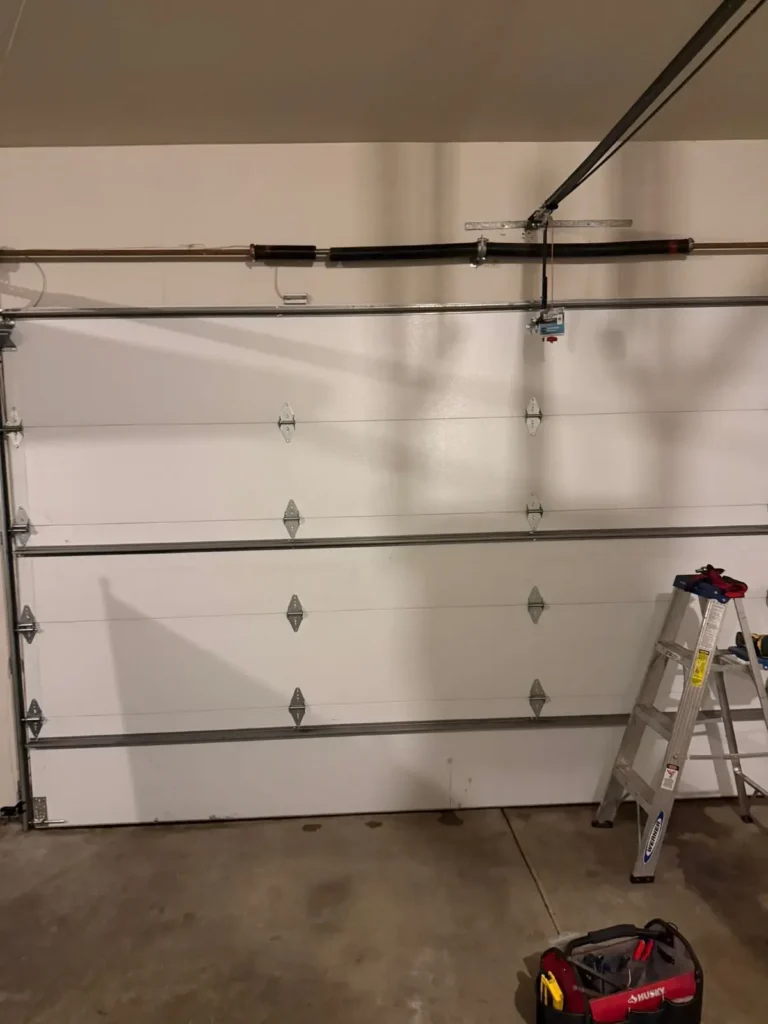
Many homeowners do not realize that road salt can impact the internal mechanical components of their garage door. When you open a wet garage door, the panels track overhead, and salt-heavy moisture can drip onto the high-tension springs mounted above or to the sides of the door. The steel used in garage door springs is highly sensitive to corrosion. Rust creates microscopic pits along the surface of the spring coils, which act as stress concentration points. Under the immense mechanical tension required to lift the door, a rusted spring is significantly more likely to snap prematurely, creating an immediate safety hazard.
3. Track Assemblies and Roller Bearings
The vertical steel tracks that guide your door up and down sit directly on the concrete garage floor, making them highly susceptible to pooling salt water. As the bottom of the tracks corrode, they can warp or lose their alignment, causing the door to bind, shake, or jam during operation. Additionally, salt dust and brine can easily penetrate the unsealed bearings of your garage door rollers, drying out the internal lubrication and causing the rollers to seize up entirely.
Practical Steps to Prevent and Fix Salt Damage
Protecting your investment against chemical corrosion requires a combination of proactive winter maintenance and targeted restorative fixes.
1. Establish a Regular Wash Routine
Do not wait for spring to clean your garage door. On days when winter temperatures climb above freezing, take a few minutes to rinse the bottom three feet of your garage door panels, tracks, and weatherstripping with a garden hose or a bucket of warm, soapy water. Using a mild car wash detergent helps neutralize and lift the salt film without stripping away the door’s protective wax finish.
2. Clean and Seal Your Garage Floor
To stop salt brine from pooling against the interior door components, sweep out standing slush and water daily using a heavy-duty push broom. For long-term protection, consider coating your concrete garage floor with a specialized polyurea or epoxy sealant. According to materials research published by institutions like the University of Illinois Urbana-Champaign (UIUC), sealing concrete surfaces prevents the absorption of corrosive chlorides, making it much easier to wash away salt residue before it migrates to your metal fixtures.
3. Repair Minor Rust Immediately
If you catch rust early before it punctures the steel panel, you can stop it from spreading. Lightly sand the affected area with fine-grit sandpaper to remove the loose rust flakes down to bare metal. Wipe the area clean with rubbing alcohol, apply a high-quality zinc-rich rust-inhibiting primer, and topcoat it with an exterior-grade paint that matches your door’s original color.
4. Regularly Inspect Product Integrity
Ensure your bottom rubber weather seal is intact and making tight contact with the floor to block salt spray from blowing inside. For more information on structural household hazards and product testing guidelines regarding home entryways, you can refer to safety alerts published by the U.S. Consumer Product Safety Commission (CPSC).
Professional Winterization and Garage Door Repair
Regular maintenance goes a long way, but if road salt has already caused deep structural rust, warped your tracks, or corroded your high-tension springs, DIY fixes can put your safety at risk. The expert team at EK Garage Door is here to restore the safety and curb appeal of your home. Our certified technicians specialize in identifying hidden salt damage, replacing compromised bottom panels, installing heavy-duty corrosion-resistant hardware, and performing comprehensive winter tune-ups across the entire Chicago area. Do not let winter weather shorten the lifespan of your garage door system, contact us today to schedule your professional inspection and ensure your door remains reliable, secure, and beautiful all year long.