

Chicago winters are notorious for their brutal sub-zero temperatures, howling winds, and heavy snowfall. While homeowners readily prepare their pipes and heating systems for the deep freeze, one crucial entryway is often overlooked until it is too late: the garage door.
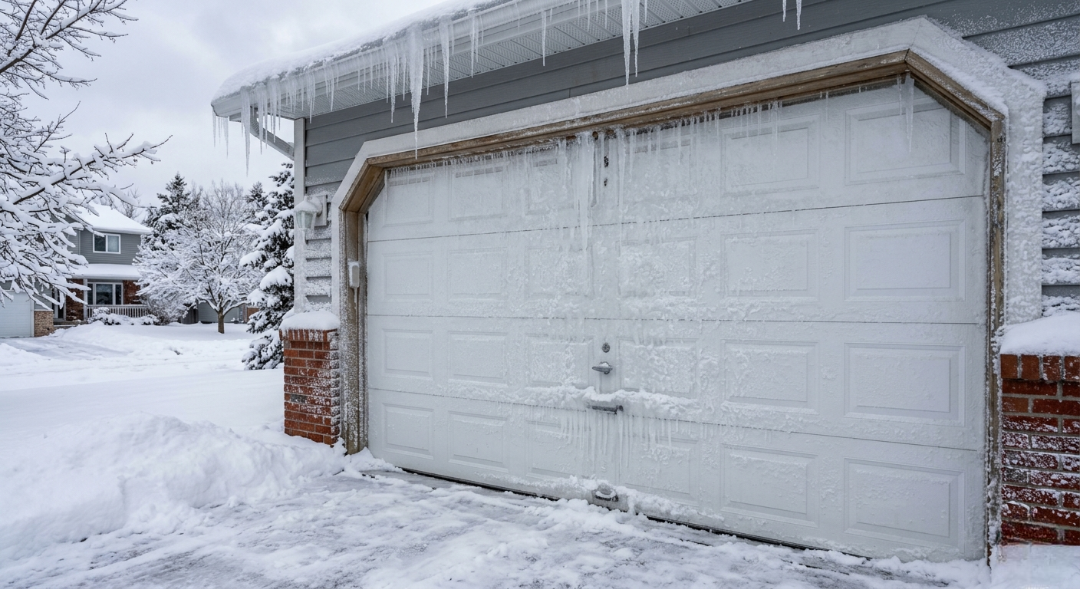
When freezing rain, melting snow, and plummeting temperatures combine, moisture pools along the rubber bottom seal of your door. Overnight, this moisture turns into a solid sheet of ice, effectively gluing your garage door to the concrete driveway. Attempting to force the door open under these conditions can cause severe damage to your automated opener, strip the gears, or tear the weatherstripping entirely off the door. Knowing how to safely unfreeze your garage door without causing costly mechanical failure is an essential winter survival skill for every Chicago resident.
The Physics of a Frozen Garage Door
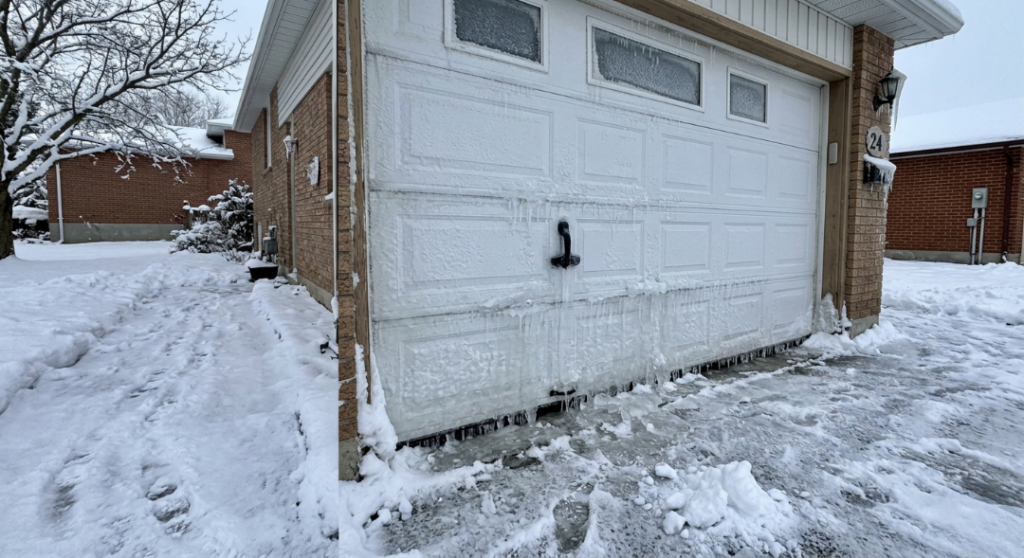
To resolve the issue safely, it helps to understand exactly what happens when your door freezes. Most modern garage doors rely on a rubber or vinyl bottom astragal seal to keep out wind, rain, and pests. While these materials are designed to remain flexible in cold weather, they are highly susceptible to surface ice bonding.
When snow melts during a brief afternoon thaw or from heat leaking out of your garage, the water runs down the face of the door and pools directly underneath the seal. As nighttime temperatures plunge well below freezing, that pooled water solidifies. Because the electric garage door opener is calibrated to lift a specific amount of weight, forcing it to pull against a solid ice bond overloads the motor, frequently resulting in stripped drive gears or a burnt-out motor casing.
Step-by-Step Guide to Safely Unfreezing Your Door
If you press your wall button or remote and hear the opener strain without the door moving, stop immediately. Do not continue pressing the button. Instead, follow these steps to clear the ice bond without damaging your equipment.
1. Disengage the Automated Opener
Your first priority is protecting the electric motor. Look for the red emergency release cord hanging from the garage door opener carriage. Pull this cord down and back toward the motor to put the door into manual mode. This completely disconnects the door from the automated drive mechanism, ensuring you will not accidentally trigger the motor and strip its internal components while trying to free the door.
2. Manually Clear Heavy Ice and Snow
Before applying any heat or force, clear away the accumulation of snow and packed ice along the exterior base of the door. Use a plastic snow shovel or a broom to clear the immediate path. Avoid using metal shovels or heavy iron ice scrapers directly against the rubber seal or the bottom panel of the door, as these tools can easily puncture the weatherstripping or scrape away the protective, rust-resistant coating on steel doors.
3. Apply Gentle Heat Along the Base
The safest and most effective way to break the ice bond is by applying direct, controlled heat. Plug a heavy-duty extension cord into a grounded outlet and use a standard household hair dryer or a portable heat gun set to a low-to-medium heat setting. Melt the ice by slowly moving the heat source back and forth along the bottom metal track and rubber seal.
Never use a propane torch, open flame, or space heater directly against the door. This presents an immediate fire hazard and can warp metal panels or melt vinyl components instantly.
4. Use Warm Water with Caution
If you do not have a heat gun or an outdoor-rated extension cord, you can pour warm water along the concrete directly beneath the rubber seal. However, this method requires extreme caution in Chicago’s sub-zero climate. The water must be warm, not boiling, as boiling water can crack cold concrete or cause thermal shock to cold door panels. Furthermore, you must immediately lift the door once the ice melts and thoroughly wipe down the wet surfaces. If you leave the water sitting on the freezing concrete, it will re-freeze within minutes, making the problem worse than before.
5. Gently Lift the Door Manually
Once you have applied heat along the entire width of the door, attempt to lift it manually using the lift handles. Do not use your feet to pry it open, and do not use a crowbar. Lift with steady, upward pressure. If the door still resists, a section of the seal is likely still bonded to the ice. Re-apply heat to that specific area and try again until the door glides upward smoothly.
What Not to Do to a Frozen Garage Door
When you are rushing to get to work in sub-zero weather, it is easy to make hasty decisions that end up costing thousands of dollars in repairs. Avoid these common winter pitfalls:
- Do Not Rely on Chemical De-Icers: Rock salt and harsh chemical ice melts should never be used on or near your garage door. Sodium chloride corrodes steel panels, ruins commercial coatings, and prematurely degrades the rubber compounds in your weather seal.
- Do Not Use Physical Force: Avoid hammering the bottom of the door or trying to kick it free from the inside. This can bend the bottom track, misalign the tracks, or break the rollers.
- Do Not Ignore the Springs: If the door is frozen solid, the tension springs are under immense stress. Forcing the system can cause an old or brittle spring to snap violently, creating an immediate safety hazard. For detailed statistics on winter home maintenance hazards and product safety guidelines, refer to the U.S. Consumer Product Safety Commission (CPSC).
Proactive Prevention: Keeping Your Door Smooth All Winter
The best way to handle a frozen garage door is to prevent it from freezing in the first place. Incorporating a few simple habits into your winter home maintenance routine can save you a significant amount of stress.
First, always keep the threshold clean. Sweep away fresh snow from the base of the door immediately after a storm before it has a chance to melt and refreeze. Second, apply a thin layer of protective coating to the bottom rubber seal. Wiping down the clean rubber astragal with a silicone-based lubricant or a light coating of cooking spray creates a hydrophobic barrier, making it much harder for water to bond to the rubber.
Finally, ensure your driveway slopes away from the garage opening. If water naturally pools at the base of your garage door due to sinking concrete, consider consulting civil engineering guidelines or local municipal building codes, such as those provided by the Illinois Department of Transportation (IDOT), to ensure proper drainage patterns are maintained around your property’s foundation.
Emergency Garage Door Repair in Chicago
Dealing with a stubborn, frozen garage door in the middle of a brutal Chicago winter can be incredibly frustrating and dangerous. If your door refuses to budget, your opener motor is humming without moving, or you suspect a frozen component has snapped a cable or spring, do not brave the freezing temperatures alone. The certified technicians at EK Garage Door are fully equipped with specialized cold-weather tools and replacement parts to get your system back in perfect working order safely. We provide fast, reliable emergency service across the entire Chicago metropolitan area, ensuring your vehicle isn’t trapped and your home remains secure. Contact us today to schedule an immediate winter inspection or professional repair tune-up.