

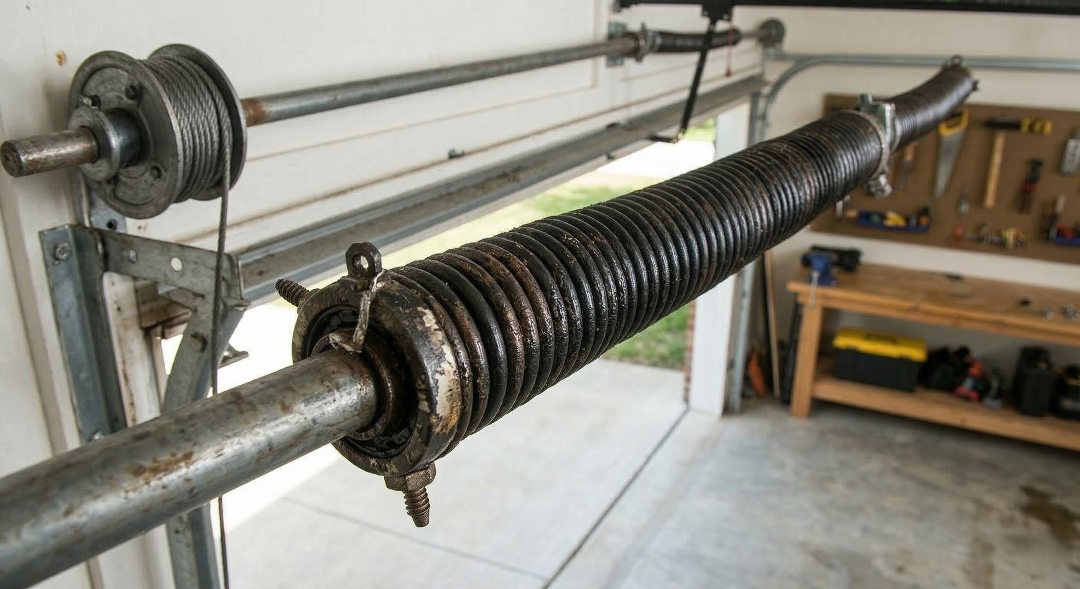
In the world of home maintenance, few components are as vital, and as misunderstood, as the garage door spring. Many homeowners in Chicago mistakenly believe that the electric opener does the heavy lifting when the door moves. In reality, the opener is merely the “brain” that initiates movement; the garage door springs are the “muscles” that do 95% of the work. At EK Garage Door, we have spent years educating our clients on the physics and safety risks associated with these high-tension components. Understanding how they work, why they fail, and how to spot trouble can save you from costly emergency repairs and, more importantly, prevent life-threatening accidents.
The Physics of the Lift: Torsion vs. Extension Springs
To understand why springs matter, you must first understand the sheer weight they are managing. A standard double-car garage door can weigh anywhere from 150 to over 300 pounds. Springs work by storing mechanical energy, either through twisting (torsion) or stretching (extension), to create a counterbalance.
Torsion Springs
Most modern Chicago homes utilize torsion springs. These are mounted on a metal shaft directly above the door opening. As the door closes, the cables attached to the bottom corners pull on the drums, winding the springs and storing energy. When you open the door, that stored energy unwinds, helping the door lift with minimal effort. Because they distribute weight more evenly, torsion springs are generally considered safer and longer-lasting.
Extension Springs
Common in older homes or garages with low headroom, extension springs run parallel to the horizontal tracks. They stretch out as the door closes and contract to pull the door up. Because they act independently on each side, they are more prone to causing the door to “jerk” or become unbalanced if one wears out faster than the other. According to the Consumer Product Safety Commission (CPSC), extension springs should always be installed with a safety cable to prevent them from becoming dangerous projectiles if they snap.
Why Chicago Winters Are the Enemy of Your Springs
Living in the Midwest presents unique challenges for garage door hardware. Steel is highly susceptible to temperature fluctuations. In the sub-zero temperatures of a Chicago winter, metal becomes brittle. When you combine cold-induced brittleness with the fact that metal contracts in the cold, you have a recipe for disaster.
Most garage door springs snap during the first major cold snap of the year. The spring is already under immense tension; when the cold causes the metal to tighten further, the internal stress exceeds the material’s threshold, resulting in a loud “bang” that many homeowners mistake for a gunshot. Regular lubrication with a low-temperature silicone spray is essential to reduce the friction that accelerates this cold-weather fatigue.
The “Cycle Life” Reality: Every Spring Has an Expiration Date
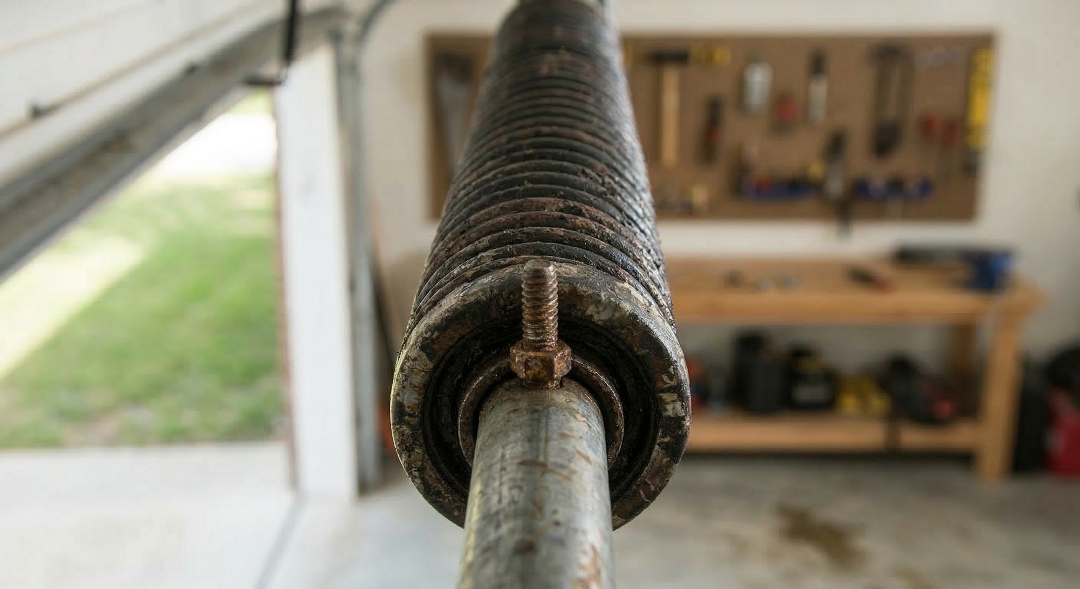
Garage door springs are not designed to last forever. They are rated by “cycles,” where one cycle represents the door opening and closing once. A standard builder-grade spring is typically rated for 10,000 cycles.
If you use your garage door four times a day (commuting to work, running errands, and coming home), you are looking at roughly 1,460 cycles per year. This means your springs have an expected lifespan of approximately 7 to 9 years. However, factors like rust, lack of lubrication, and the extreme Chicago humidity can shorten this lifespan significantly. At EK Garage Door, we often recommend upgrading to “High-Cycle” springs (rated for 25,000+ cycles) for busy households to ensure long-term reliability.
Signs of a Failing or Broken Spring
Identifying a problem before the spring snaps is the best way to avoid being “held hostage” by a car trapped in the garage. A broken spring is a primary cause of garage door opener failure, as the motor tries to lift the full dead weight of the door without the spring’s help, often stripping the gears in the process.
Keep an eye out for these red flags:
- A Visible Gap: If you look at the spring above your door and see a 2-inch gap between the coils, the spring has already snapped.
- The Door Stops After 6 Inches: Most openers have a safety sensor that detects excessive weight. If the door starts to rise and then stops immediately, it’s likely because it no longer has the spring’s assistance.
- Heavy Manual Operation: If you pull the emergency release cord and cannot easily lift the door with one hand, your springs are either unbalanced or near the end of their life.
- Loud Squeaking or Grinding: This is often the sound of metal-on-metal friction or the spring “binding” against itself.
The Danger of DIY: Why You Should Never Tighten Springs Yourself
While many home repairs are suitable for a weekend DIY project, garage door spring adjustment is not one of them. The tension held within a torsion spring is enough to cause severe lacerations, bone fractures, or even fatalities if the spring or the winding bar slips.
Professional technicians use specialized winding bars and heavy-duty vice grips to manage the torque. Furthermore, springs must be matched exactly to the weight and height of the door. Installing a spring that is “close enough” in size can lead to an unbalanced door that either crashes down or flies up uncontrollably. Data from DASMA (Door & Access Systems Manufacturers Association) highlights that thousands of injuries occur annually due to improper handling of high-tension garage hardware.
Enhancing Longevity Through Professional Maintenance
The best way to protect your investment is through a biannual “Tune-Up.” During a professional visit from EK Garage Door, we don’t just look at the springs. We check the balance of the door, which ensures the springs are under the correct amount of tension. We also inspect the cables and pulleys. When a spring breaks, the cables often lose tension and can become tangled or frayed. By maintaining the entire system, you ensure that the load is distributed evenly, preventing one part from failing prematurely.
Partner with Chicago’s Trusted Spring Specialists
A broken garage door spring isn’t just a nuisance; it’s a significant safety hazard and a disruption to your daily life. At EK Garage Door, we understand the urgency of these situations, especially when your vehicle is stuck inside. Our team of certified technicians specializes in the precision replacement and calibration of both torsion and extension springs, using only high-quality, oil-tempered steel components designed to withstand the harsh Illinois climate. We take pride in our “Safety First” approach, ensuring that every door we service is perfectly balanced and compliant with UL 325 safety standards. If you’ve heard a loud snap, noticed your door is moving slowly, or realized it has been over seven years since your last service, contact us today at (312) 860-1171 to schedule an expert inspection,let us handle the heavy lifting so you don’t have to.