


The humble garage door has undergone a radical transformation. No longer just a heavy slab of steel or wood, the modern garage door is now a sophisticated, high-tech gateway that serves as the “brain” of home security and energy management. For Chicago homeowners, where extreme weather and urban security are constant considerations, these technological leaps offer more than just convenience, they provide a comprehensive digital shield. At E.K. Garage Door, we stay at the cutting edge of these innovations to ensure our clients benefit from the latest in safety, efficiency, and smart integration.
The Rise of AI-Driven Predictive Maintenance
One of the most significant breakthroughs in 2026 is the integration of Artificial Intelligence (AI) into garage door openers. Traditional systems were reactive, you called for help only after a spring snapped or the motor seized. Modern AI-enhanced systems are proactive. They utilize vibration sensors and usage-cycle tracking to analyze the “health” of your door in real-time.
These systems can detect minute changes in the sound of your motor or a slight increase in the force required to lift the door. When an anomaly is detected, the system sends a predictive alert to your smartphone, warning you that a component is nearing failure before it actually breaks. Research from Stanford University on IoT (Internet of Things) demonstrates that predictive diagnostics can extend the lifespan of residential mechanical systems by up to 30%, saving homeowners thousands in emergency replacement costs.
Biometric Security: Moving Beyond the Keypad
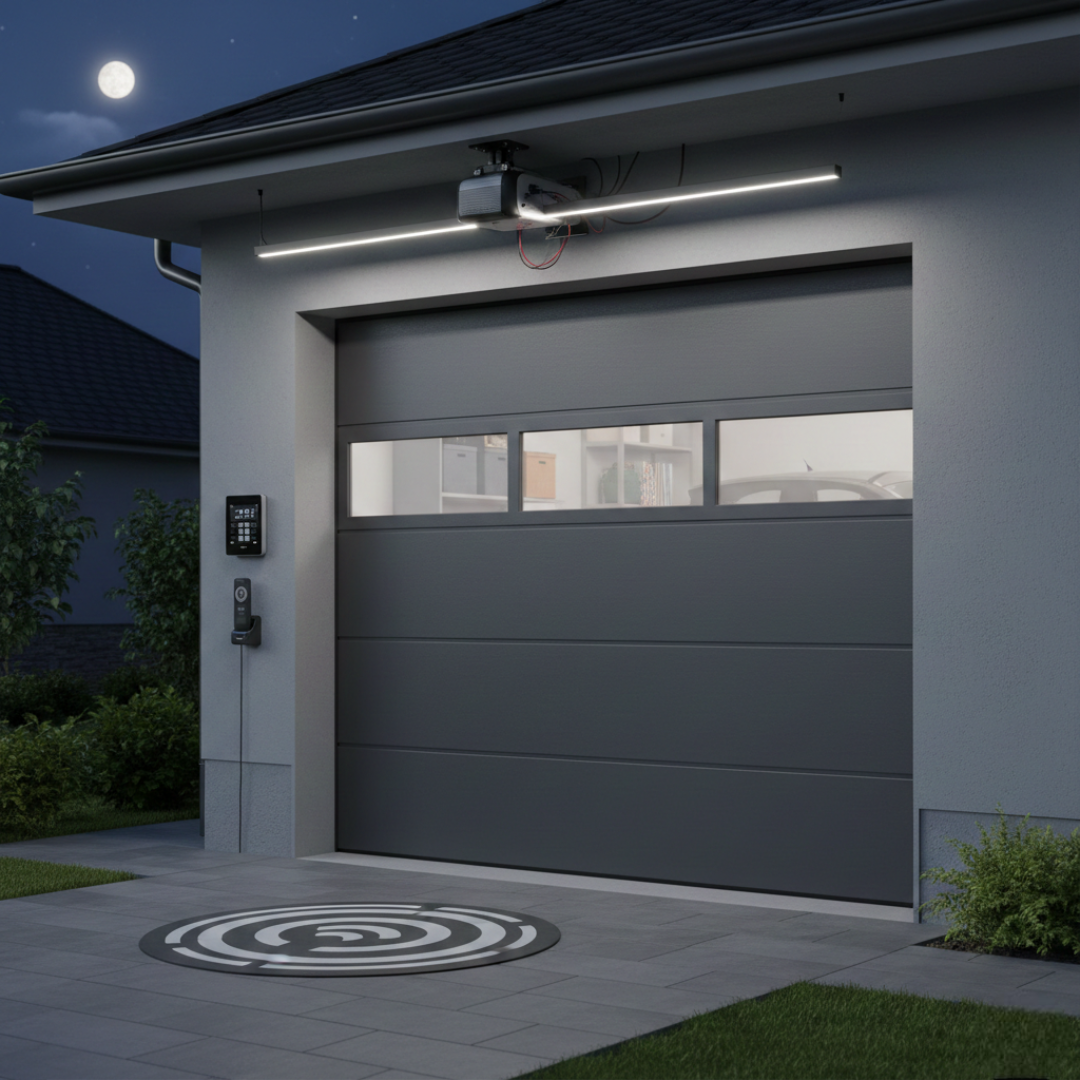
The days of hiding a spare key under a flowerpot or worrying about a stolen remote are over. 2026 has seen the mainstream adoption of biometric access for garage doors. High-end openers now feature integrated fingerprint scanners or facial recognition cameras directly on the exterior trim.
Why Biometrics Are Changing the Game:
- Uncopyable Access: Unlike rolling codes, which are highly secure but technically interceptable, biometric data is nearly impossible for intruders to spoof.
- Temporary “Guest” Permissions: You can program your system to recognize the faces of delivery drivers or service professionals for a specific window of time, revoking access automatically once the job is done.
- Enhanced Child Safety: Parents receive notifications exactly when their children arrive home, verified by facial recognition, providing an extra layer of peace of mind.
According to home security benchmarks provided by the National Institute of Standards and Technology (NIST), biometric multi-factor authentication is currently the gold standard for preventing unauthorized residential entry.
Sustainability and “Smart” Thermal Management
In Chicago, energy efficiency isn’t just a buzzword; it’s a financial necessity. The latest garage door technology focuses on active thermal management. Modern doors now feature advanced polyurethane cores with R-values exceeding 18.0, but the real innovation lies in the “Smart Seal” technology.
New systems utilize sensors to monitor the air quality and temperature inside the garage. If the system detects rising humidity that could lead to mold or extreme temperature drops that might threaten your vehicle’s battery, it can trigger smart ventilation or adjust its seal pressure to optimize the garage’s climate. Furthermore, many 2026 models are designed for solar-ready integration, allowing the opener to run entirely on renewable energy stored in a dedicated battery backup, a crucial feature during Chicago’s frequent summer storm power outages.
Seamless Smart Home Ecosystem Integration
In 2026, the garage door is no longer a siloed appliance; it is a central node in your Smart Home Ecosystem. Compatibility with platforms like Apple HomeKit, Amazon Alexa, and Google Home is now standard, but the level of integration has deepened.
Advanced Integration Features Include:
- Geofencing 2.0: Utilizing your car’s GPS or your smartphone’s proximity, the door anticipates your arrival. As you turn onto your street, the door opens, and your home’s interior lights turn on simultaneously.
- In-Garage Delivery Synergy: Technology like Amazon Key has evolved. Sensors now create a “secure zone” within your garage where couriers can leave packages, monitored by a 360-degree 4K camera integrated into the opener itself.
- Vehicle Health Monitoring: Some high-tech openers can now sync with your vehicle’s onboard computer via Bluetooth, alerting you if your car is leaking fluid or if your tire pressure is low while you are parked.
For more information on the evolving standards of smart home connectivity, homeowners can consult the International Code Council (ICC), which provides the regulatory framework for safe and secure automated building systems.
Experience the Future of Access with E.K. Garage Door
The technology behind your garage door is moving faster than ever, and choosing the right system requires an expert who understands both mechanical engineering and digital security. At E.K. Garage Door, we don’t just install doors; we design modern access solutions tailored to the unique needs of Chicago families. Whether you are looking for the whisper-quiet operation of a direct-drive AI motor or the ironclad security of biometric access, our team has the expertise to bring your home into the future. Don’t settle for a 20th-century door in a 21st-century world. Contact us today to schedule a consultation and discover how the latest innovations can make your home safer, smarter, and more efficient.