

Chicago’s grid sees its share of stress, from summer thunderstorms rolling off the lake to ice-loaded power lines in January. When the electricity goes out, your automatic garage door opener goes with it, and being unprepared in that moment can turn a minor inconvenience into a real problem, especially if it happens after dark or during a storm.
Rather than walking through the manual release procedure step by step, which we cover in detail in our guide on how to manually open your garage door when the power goes out, this checklist focuses on getting your entire garage ready before an outage ever happens, so the moment itself is far less stressful when it eventually arrives.
Before the Outage: A Seasonal Readiness Routine
A few minutes of preparation each season can save you a frustrating scramble later. Start by confirming you know the exact location of your emergency release cord and that it pulls freely without resistance, then check that your manual slide lock is not accidentally engaged, which would prevent the door from moving even after the cord is pulled. Keep a flashlight or headlamp near the garage entry door for nighttime outages, since fumbling for a light switch that will not work wastes valuable time. If your opener includes a backup battery, test that it is still holding a charge well before storm season arrives, and apply a silicone lubricant to the bottom seal before winter to prevent it from freezing directly to the concrete driveway.
Building a Small Emergency Kit for the Garage
Most households keep a general emergency kit somewhere in the house, but few think to keep garage-specific supplies close at hand. A small kit stored on a shelf near the entry door, including a flashlight with fresh batteries, a spare set of work gloves, and a can of silicone spray, means you are never searching the house in the dark for what you need. If your opener uses a 9-volt backup battery for the wall control or remote, keeping a spare on the same shelf removes one more point of failure during an already stressful moment.
The Case for a Battery Backup Opener
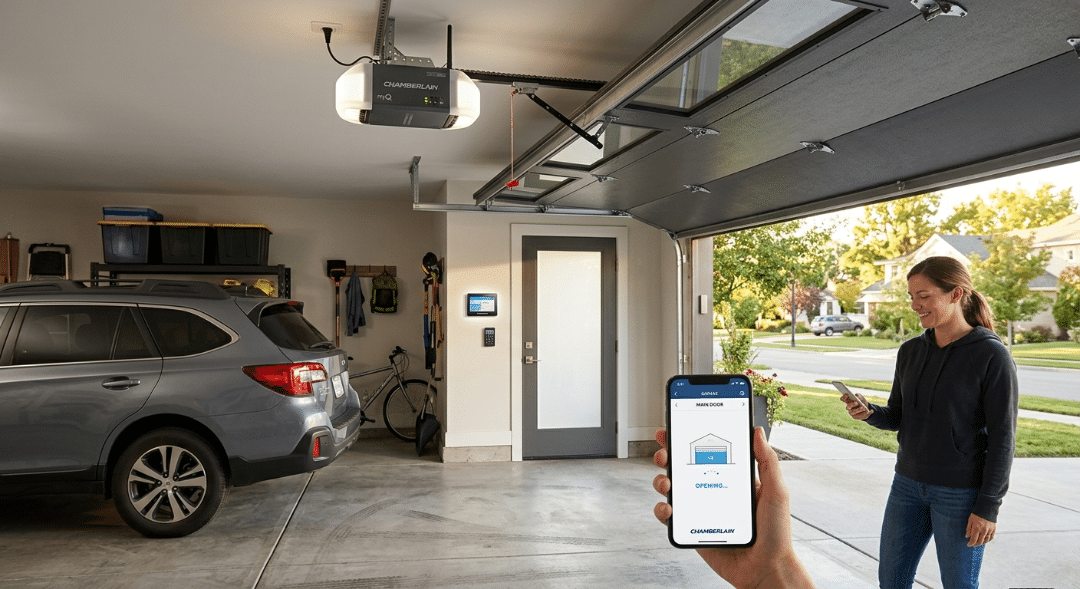
The single biggest upgrade you can make for outage resilience is a modern opener with an integrated battery backup. These units automatically switch to battery power the instant the grid drops, letting you keep using your remote or smartphone app exactly as normal, often for dozens of cycles before the battery needs recharging.
For households that rely on the garage as a primary entry point, or for anyone who parks a second vehicle inside overnight, this single upgrade removes the entire problem rather than simply managing it after the fact. Many homeowners are surprised to learn that a battery backup can often be retrofitted onto an existing opener model rather than requiring a full replacement, making it a relatively affordable addition during a routine service visit.
Cold-Weather Outages Bring Extra Risk
A power outage during a Chicago winter storm carries an added complication: your door’s rubber bottom seal can freeze directly to the driveway. If you already applied a silicone weatherstripping lubricant before the season began, the seal releases cleanly instead of tearing when you attempt to lift the door manually, saving you both a repair bill and a struggle in freezing temperatures.
If you are using a portable space heater or generator in or near the garage during an extended winter outage, always follow the manufacturer’s ventilation guidance closely, since an enclosed garage can trap exhaust fumes even with the main door briefly opened.
Safety Reminders for Any Outage
Never attempt the manual release while the door is stuck in a partially open position, and always disconnect opener power before manually operating the door to prevent it from re-engaging unexpectedly once electricity returns. Guidance from the U.S. Consumer Product Safety Commission (CPSC) underscores that overhead doors are among the heaviest moving objects in a typical home, and that risk does not disappear just because the power happens to be out.
What to Do After Power Returns
Once electricity is restored, ensure the manual lock is fully disengaged before attempting to reconnect the automatic system. Reset the trolley by pulling the release cord toward the door opening until you feel it click back into place, then plug the opener back in and test it with your remote or wall button to confirm normal operation. Before returning to regular daily use, take a moment to confirm the safety sensors are still aligned and functioning, since a jarred sensor during the outage or a manual operation attempt is an easy detail to overlook.
Helping Older Family Members Prepare Too
If you have elderly parents or relatives living independently, a garage door power outage can present a bigger challenge for them than it would for you. Walking through the manual release location together before an outage occurs, and confirming they can physically operate the release cord and lift the door, is worth doing well before storm season rather than during an emergency call. A battery backup opener removes this concern almost entirely, since it allows continued remote or keypad operation without requiring any physical strength to lift the door by hand.
Why Preparation Beats Reaction
Every step in this checklist shares the same underlying goal: shifting the moment of decision-making from the middle of a stressful outage to a calm afternoon well before one occurs. A homeowner who has already tested their release cord, checked their battery, and treated their seals heads into a storm with a plan, while a homeowner discovering these details for the first time in the dark is far more likely to force a stuck door, damage a seal, or simply feel stranded until power returns on its own.
Prepare Your Garage for Any Outage with EK Garage Door
Whether you want a battery backup opener installed before the next storm or need your current system inspected and winterized, EK Garage Door is here to help. We offer garage door opener installation and full-system tune-ups across Chicago and Cook County. Contact us today to get your garage storm-ready.