

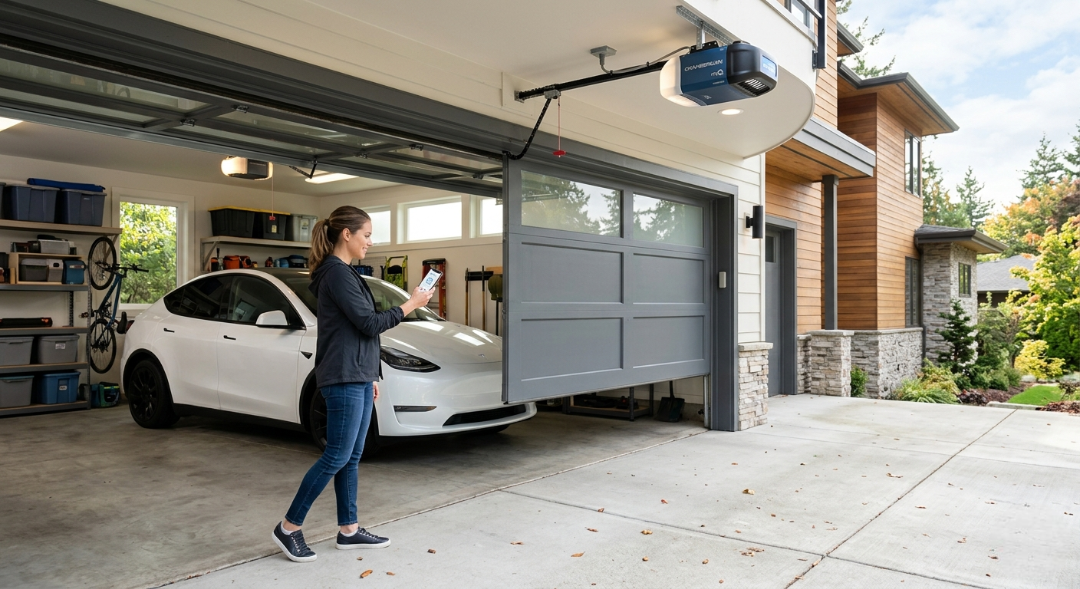
Your garage door opener works quietly in the background, cycling dozens of times a week without much thought, until it starts acting up. Because failures are often gradual rather than sudden, many Chicago homeowners keep pushing an aging opener well past the point where replacement makes more sense than another repair.
Here are 5 clear signs it’s time to replace your garage door opener, rather than continuing to patch a system that is quietly working against you, often at the cost of your safety features along the way.
1. The Opener Is Louder Than It Used to Be
Grinding, scraping, or a sudden rattle that was not there a year ago usually points to worn internal gears or a stripped drive component. While a small amount of noise increase can sometimes be solved with lubrication, a dramatic change in sound is a strong signal that the motor or drive system is failing internally rather than simply needing a tune-up. Pay particular attention if the noise seems to originate from the motor housing itself rather than the rail or chain, since that often points to a failing internal gear rather than a simple maintenance fix.
2. Slow or Inconsistent Response Times
If you press the remote and the door hesitates, starts and stops, or takes noticeably longer to fully open or close, the motor may be struggling to deliver consistent power. This is especially common in openers approaching or exceeding the 10 to 15 year mark, where components have simply logged more cycles than they were designed for.
3. The Remote or Keypad Is Increasingly Unreliable
Occasionally needing a battery swap is normal. Needing to stand directly under the unit, press the button repeatedly, or reprogram your remote every few weeks points to a failing receiver board inside the opener itself, a component that typically cannot be repaired on its own and signals the unit is nearing the end of its service life.
4. Safety Features No Longer Work Correctly
Every modern opener should reverse immediately when it senses an obstruction and stop cleanly when the photo-eye sensors are blocked. If your door continues closing on an object or fails the auto-reverse test, this is a serious safety issue that warrants immediate replacement, not just a repair attempt, since this feature exists specifically to prevent injury, particularly to children and pets who may not react quickly enough to a closing door.
5. You Are Missing Out on Modern Security and Convenience Features
Openers built more than a decade ago typically lack rolling security codes, smartphone app control, and integration with home security systems. If your current unit still relies on a fixed remote code, upgrading also closes a real, if often overlooked, security gap in your home that many homeowners do not think about until it is pointed out.
How Long Do Garage Door Openers Actually Last?
Most residential openers are built to last between 10 and 15 years under normal use, though heavier daily cycling or extreme temperature exposure, both common in Chicago garages, can shorten that lifespan. Rather than tracking age alone, it helps to weigh how often you have needed a service call in the past year. A single isolated issue is usually worth repairing, while a pattern of recurring problems on the same unit is a strong indicator that its internal components are wearing out across the board, not just in one isolated spot. Consistent exposure to summer humidity followed by winter cold accelerates wear on seals, lubricants, and circuit boards alike, which is part of why openers in our climate often show their age sooner than the manufacturer’s general estimate suggests.
Weighing the Cost of Repeated Repairs
A single service call to fix a dead capacitor or realign a sensor is almost always worth doing on an otherwise healthy unit. The calculation changes once you find yourself calling for the second or third issue within a year or two. Each individual repair may seem reasonable in isolation, but the combined cost of multiple service visits on an aging opener frequently approaches, or exceeds, the cost of a single new unit that comes with a fresh warranty and none of the accumulated wear.
What to Look for in a Replacement Opener
When the time comes to replace rather than repair, prioritize a unit with horsepower or torque appropriate for your specific door’s weight, a built-in battery backup for outage resilience, and smartphone connectivity if remote monitoring matters to your household. Belt drive models are worth strong consideration for attached garages where quiet operation is a priority. A longer manufacturer’s warranty is also a meaningful signal of build quality, since manufacturers confident in their components tend to back them for longer periods.
Do Not Wait for a Complete Failure
One of the most common mistakes homeowners make is waiting until an opener fails completely before considering replacement, often on the exact morning they need to leave for work. Planning a replacement around the warning signs above, rather than around an emergency, gives you time to compare options, schedule installation at a convenient time, and avoid the added cost and stress of a same-day emergency call. An opener that has been showing two or three of these signs simultaneously is rarely going to improve on its own, and in most cases the underlying wear will continue progressing steadily until the unit fails outright, typically at the least convenient possible moment.
Repair or Replace? A Quick Comparison
| Situation | Repair Usually Makes Sense | Replacement Usually Makes Sense |
| Opener age | Under 8 years old | 10+ years old |
| Issue type | Sensor misalignment, dead remote battery | Motor noise, failed safety reversal, worn gears |
| Repair frequency | First-time issue | Repeated service calls for the same unit |
Upgrade Your Opener with EK Garage Door
If any of these signs sound familiar, it may be time to stop repairing and start upgrading. EK Garage Door offers professional garage opener replacement and new opener installation throughout Chicago and Cook County. Contact us today for a free assessment of your current system.