

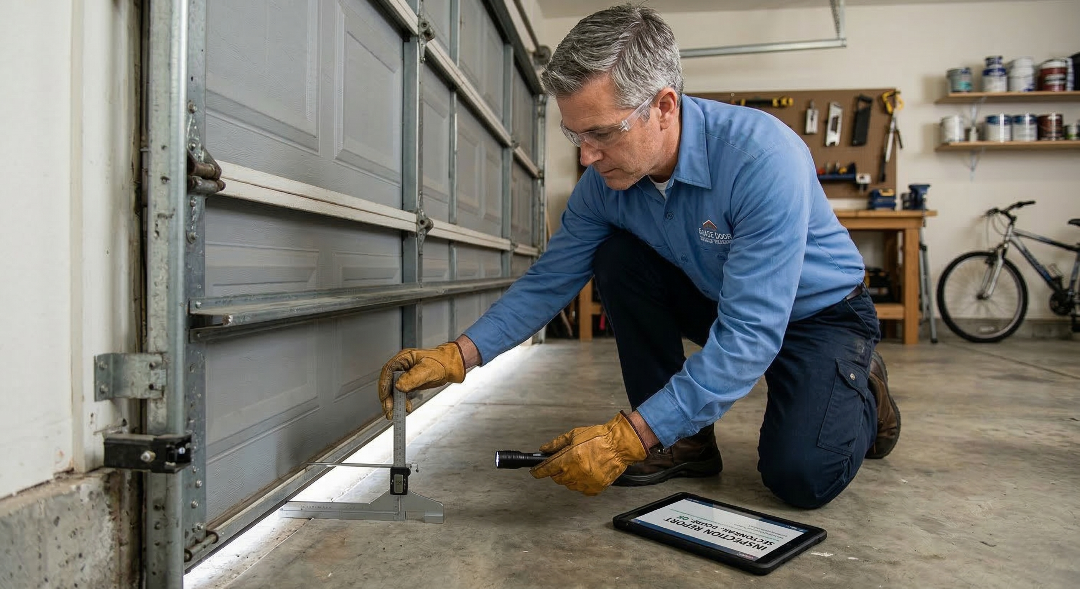
For many Chicago homeowners, the garage door is the most used entrance to the property. It is a complex mechanical system that operates under immense pressure, yet it is often the most neglected component of home maintenance. At EK Garage Door, we have seen firsthand how a simple oversight can escalate into a costly emergency repair or, worse, a preventable safety hazard. Regular garage door inspections are not merely a suggestion; they are a critical requirement for ensuring the longevity of your hardware and the safety of your household.
In a city that experiences extreme temperature swings, from the humid heat of July to the sub-zero “Polar Vortex” winters, the mechanical integrity of your door is constantly tested. Understanding the value of proactive maintenance can save you thousands of dollars in premature replacement costs and provide peace of mind that your home remains secure.
Why Chicago Weather Demands Frequent Inspections
The Chicago climate is particularly harsh on mechanical systems. The metal components of a garage door, including the tracks, springs, and rollers, undergo significant thermal expansion and contraction throughout the year. During the winter, road salt carried in by vehicles can lead to accelerated corrosion of the bottom brackets and cables.
When metal becomes cold, it becomes more brittle. This is when high-tension components like torsion springs are most likely to snap. A professional inspection ensures that these parts are properly lubricated with climate-appropriate synthetic lubricants that do not thicken in freezing temperatures. Without this specialized care, your opener works twice as hard to move the door, leading to motor burnout and gear failure. According to the U.S. Department of Energy, maintaining a well-sealed and smoothly operating garage door is also a key factor in residential energy efficiency, particularly for homes with attached garages.
Prioritizing Household Safety through Mechanical Audits
A garage door is often the heaviest moving object in a home, weighing anywhere from 150 to over 400 pounds. It is held in place by a system of counterbalances that, if failed, can turn the door into a significant liability.
Entrapment Protection and Auto-Reverse Testing
Federal law requires all automatic openers to have safety features designed to prevent entrapment. During a standard inspection, we test the photo-eye sensors to ensure they are aligned and clean. We also perform a “force test,” where an object is placed in the door’s path to ensure the motor reverses instantly upon contact. The Consumer Product Safety Commission (CPSC) highlights that these safety systems are vital for protecting children and pets, but they must be tested regularly to ensure they haven’t been bumped out of alignment or suffered electrical degradation.
Cable and Spring Integrity
The cables and springs are the “muscles” of your garage door. Over time, cables can fray and springs can suffer from metal fatigue. Because these parts are under extreme tension, a failure can be catastrophic. A professional inspection involves a visual audit for small frays or “glassy” spots on the springs that indicate they are nearing the end of their lifecycle. Replacing a worn spring during a scheduled visit is far safer and less expensive than dealing with a snapped spring that has left your car trapped inside the garage on a Monday morning.
Maximizing Performance and Operational Lifespan
Beyond safety, regular inspections are about performance. A well-maintained door operates quietly and smoothly, whereas a neglected door will vibrate, squeak, and strain the opener.
The “Search and Tighten” Protocol A garage door moves up and down thousands of times a year. This constant motion creates vibrations that can loosen the nuts and bolts holding the tracks and the opener’s carriage in place. During a professional maintenance visit, we inspect every hinge, bracket, and track fastener. By keeping the hardware snug, we prevent the “shaking” that leads to cracked panels and bent tracks.
Roller and Bearing Maintenance Whether you have plastic, steel, or nylon rollers, they require periodic inspection. A seized roller, one that no longer spins, will slide along the track instead of rolling. This creates friction that can actually wear a hole through the steel track over time. We ensure that rollers are replaced before they cause structural damage, keeping your door moving with the whisper-quiet precision that modern homeowners expect.
The Professional Inspection Advantage
At EK Garage Door, we pride ourselves on Experience, Expertise, Authoritativeness, and Trustworthiness (E-E-A-T). While a homeowner can certainly perform a visual check, a professional inspection involves technical diagnostic tools that the average person doesn’t have in their garage.
We utilize balance scales to ensure the door is perfectly counterbalanced. A door is “in balance” if it stays in place when moved halfway up the tracks manually. If it shoots up or slams down, the spring tension is incorrect. Only a trained technician should adjust this tension, as it requires specialized winding bars and a deep understanding of torque physics. Our localized knowledge of Chicago building styles, from historic brick bungalows to modern West Loop lofts, allows us to identify specific structural weaknesses common to local architecture.
The Financial Benefits of Proactive Maintenance
Many homeowners view a professional inspection as an added expense, but in reality, it is a cost-saving measure. Consider the “emergency repair” scenario: a spring snaps at 11:00 PM on a Friday. Emergency service fees, combined with the potential damage to the opener’s motor from trying to lift a dead-weight door, can easily triple the cost of what a simple afternoon maintenance check would have been.
Regular inspections extend the life of your door by several years. By addressing minor issues, like a worn weather seal or a dry bearing, before they cause a chain reaction of failures, you protect your home’s primary entry point and its overall valuation. A high-performing, aesthetically pleasing garage door consistently ranks as one of the top home improvement projects for Return on Investment (ROI) in the Midwest.
Identifying Red Flags Between Inspections
While we recommend a professional inspection at least once a year, homeowners should stay vigilant for “red flags” that indicate a problem is developing:
- New Noises: Grinding, scraping, or loud popping sounds should never be ignored.
- Slow Response: If the door takes longer than usual to begin moving, the motor or logic board may be failing.
- Uneven Gaps: If you see light peeking through the bottom or sides when the door is closed, your tracks may have shifted or your weather stripping has perished.
Secure Your Peace of Mind with EK Garage Door
Your garage door is a vital component of your home’s security and convenience; don’t wait for a total breakdown to give it the attention it deserves. At EK Garage Door, we provide comprehensive, multi-point inspections designed to catch small issues before they become dangerous failures. Our team of Chicago-based experts is committed to ensuring your door operates at peak performance through every season, protecting your family and your investment with every cycle. Contact us today to schedule your comprehensive safety and performance inspection, ensure your door is ready for whatever the Chicago weather throws its way.