

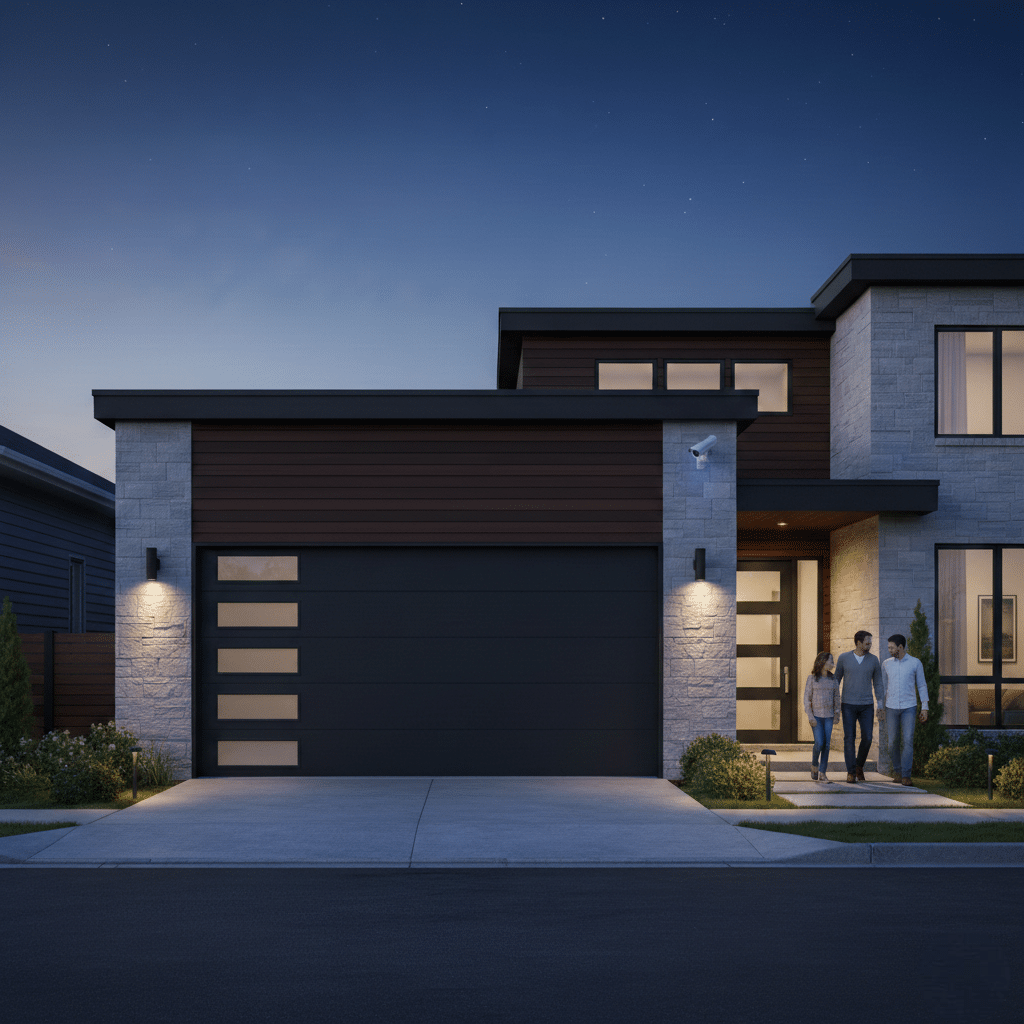
Beyond Convenience: How Modern Garage Doors Improve Home Security
In the landscape of residential security, the garage is often the most overlooked vulnerability. For many Chicago homeowners, the garage door serves as the primary entrance to the home, yet it is frequently the weakest point in the security envelope. According to national crime statistics, nearly 9% of residential break-ins occur through the garage, making it a prime target for opportunistic intruders.
At E.K. Garage Door, we view your garage door as more than just a motorized convenience; it is a critical defensive barrier. In 2026, the technology and materials used in garage door construction have evolved to offer a “digital and physical shield” that protects your family, your vehicles, and your peace of mind.
The Garage as a High-Value Target
Intruders target garages because they often house high-value, easily liquidable assets like power tools, bicycles, and vehicles. Perhaps more importantly, for homes with attached garages, once a burglar breaches the overhead door, they have a private, sheltered space to work on the interior door leading into your living quarters without being seen from the street.
Modern security strategies emphasize deterrence and delay. A flimsy, outdated garage door can be breached in seconds with basic tools. In contrast, a modern, professionally installed system forces an intruder to spend significant time and noise to attempt an entry, factors that most criminals simply won’t risk.
Physical Reinforcement: The Strength of Modern Materials
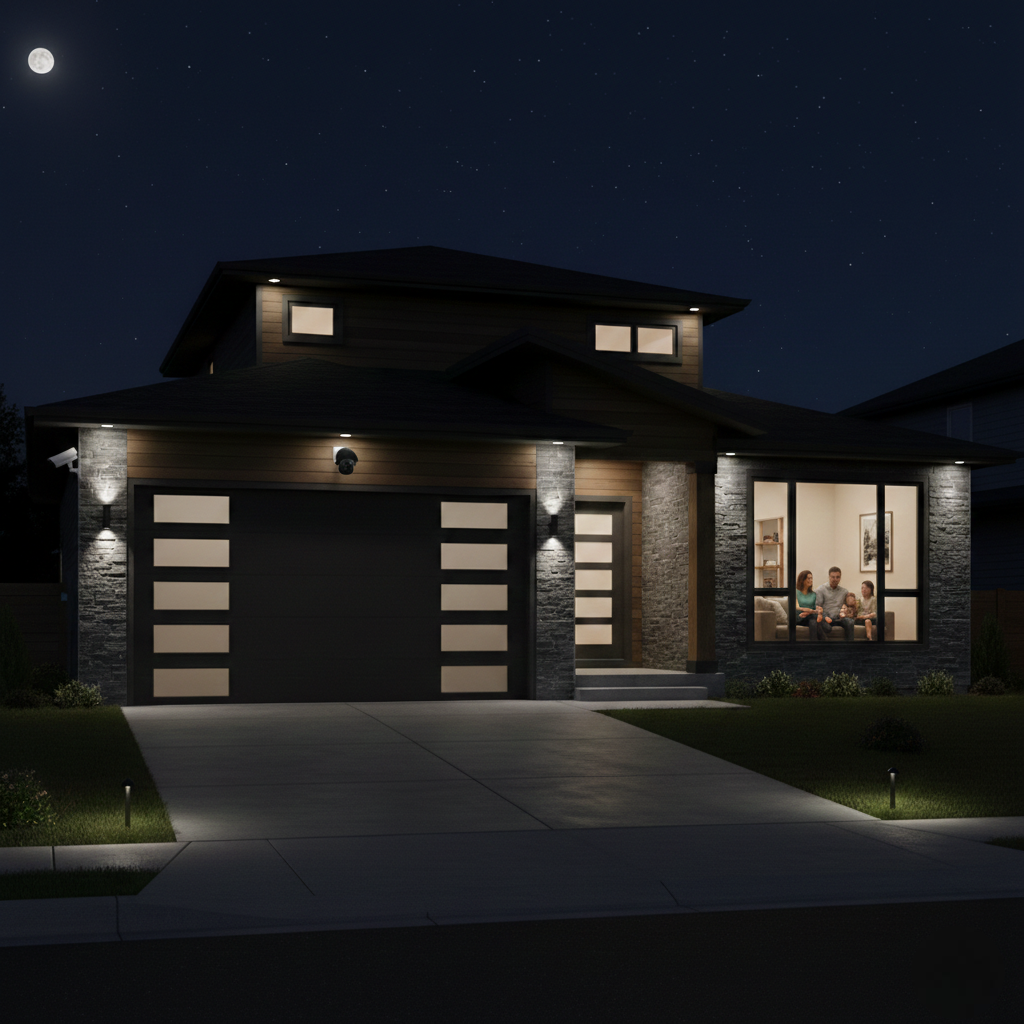
The first line of defense is the physical integrity of the door panels. Older doors made of single-layer aluminum or thin wood are susceptible to “brute force” entry, where a panel can be kicked in or pried away from the track.
E.K. Garage Door recommends high-tensile steel or reinforced composite materials for maximum security.
- Triple-Layer Construction: These doors feature a “sandwich” design with two layers of heavy-gauge steel surrounding a core of dense polyurethane insulation. This doesn’t just improve R-value; it creates a rigid, impact-resistant structure that is significantly harder to dent or penetrate.
- Tamper-Resistant Hardware: We utilize heavy-duty struts and reinforced bottom brackets. These components prevent a common burglary tactic known as the “fishing” move, where an intruder uses a wire coat hanger to pull the emergency release cord from the outside.
- Sturdy Guide Rails: Modern tracks are designed to be “interlocking,” ensuring that even if force is applied, the rollers cannot be easily popped out of the channel.
For technical guidance on the structural standards required to resist forced entry, homeowners can refer to the International Code Council (ICC), which sets the benchmark for residential safety and building integrity.
Smart Technology: Digital Vigilance 24/7
The most significant evolution in garage security over the last decade is the integration of Smart Home Technology. In 2026, your garage door is no longer a “dumb” appliance; it is a connected security hub.
Rolling Code Encryption
Older garage door openers used “static” codes that could be easily intercepted by “code grabber” devices. Modern systems installed by E.K. Garage Door utilizes Rolling Code Technology. Every time you press your remote, a new, encrypted code is generated from billions of possibilities. The previous code is immediately discarded, making it virtually impossible for a hacker to replicate the signal.
Real-Time Monitoring and Geofencing
With smartphone integration, you are never “away” from your garage.
- Instant Alerts: Receive a notification the moment your door is opened or closed. This is vital for detecting unauthorized access while you are at work or on vacation.
- Auto-Close Timers: One of the most common security lapses is simply forgetting to close the door. Smart openers allow you to set a schedule or a timer that ensures the door closes automatically after a set period of activity.
- Geofencing: Your door can be programmed to detect your vehicle’s GPS proximity, opening as you arrive and, more importantly locking securely as soon as you depart the “home zone.”
The National Institute of Standards and Technology (NIST) provides extensive resources on the encryption standards that protect these IoT devices from digital intrusion, ensuring your “smart” home remains a “safe” home.
Integrated Surveillance and Lighting
A well-lit property is a major deterrent. Intruders prefer to work under the cover of darkness. Modern openers often come equipped with 360-degree LED lighting and built-in 4K HD cameras. These cameras feature two-way audio and motion-activated recording, allowing you to see and speak to anyone near your garage threshold directly from your phone.
According to home security tips from Security.org, combining motion-activated lighting with visible surveillance cameras can reduce the likelihood of a targeted break-in by over 50%. These systems act as a psychological barrier, signaling to potential intruders that your home is actively monitored.
Internal Defense: Securing the Connection
While the overhead door is the primary barrier, the door leading from the garage to your home is often the final line of defense. We advocate for a “layered” security approach.
- Solid-Core Interior Doors: The interior door should be as strong as your front door, ideally solid hardwood or metal-clad.
- Deadbolt Integration: Always install a high-quality deadbolt on the interior door.
- Smart Sensors: Adding a simple contact sensor to this interior door ensures that even if the garage is breached, your home’s main alarm system will trigger immediately.
Resources from Iowa State University Extension emphasize that treating the garage as an “exterior zone” rather than an “interior room” is essential for a comprehensive home safety posture.
Maintenance as a Security Measure
A poorly maintained door is a security risk. If your door doesn’t close flush with the ground, it leaves a gap that can be exploited. If the springs are weak, the door may not stay locked under the tension of the motor. Regular preventative maintenance ensures that all locking mechanisms engage correctly and that safety sensors are aligned to prevent “phantom” openings.
Upgrade Your Chicago Home’s Defense Today
In an era where home security is a top priority for Chicago families, your garage door should be your strongest asset, not your weakest link. Whether you need a high-impact reinforced steel door, a smart opener with biometric encryption, or a professional security audit of your current system, E.K. Garage Door is here to help. We combine local Chicago expertise with the latest in global security technology to provide a seamless, fortress-like entry for your home. Don’t wait for a security breach to realize your door is outdated. Contact us today at (312) 860-1171 to schedule a professional inspection and take the first step in fortifying your home.