

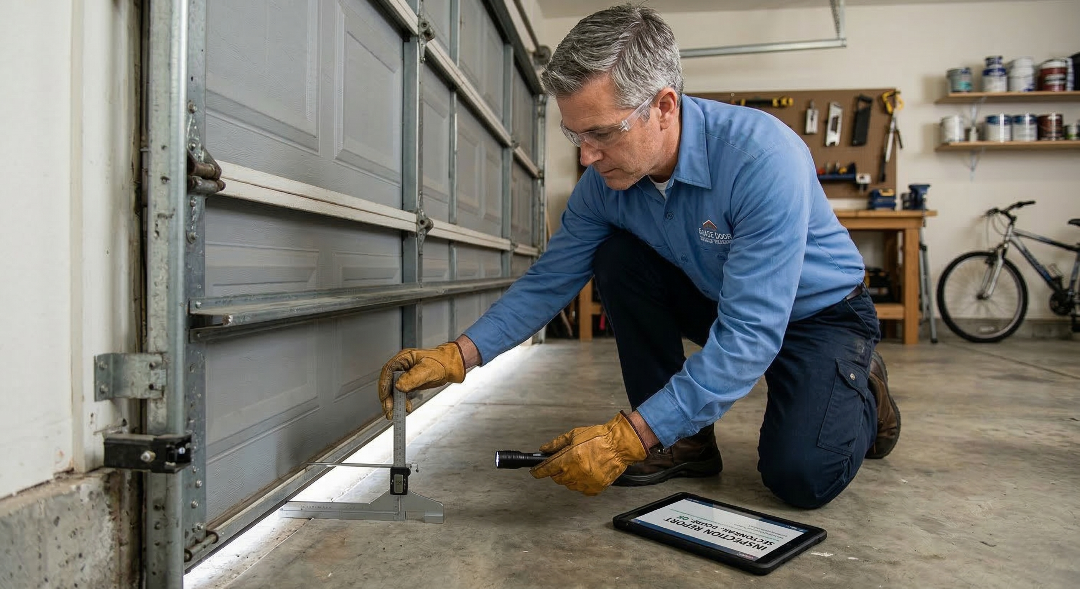
For most homeowners in Chicago, the garage door is a “set it and forget it” feature, until it refuses to open on a sub-zero morning. Because it is the largest moving object in your home, its complexity is often underestimated. A professional garage door inspection is a high-level diagnostic process designed to identify microscopic fractures in springs, misalignments in tracks, and electronic glitches in the opener before they manifest as dangerous failures.
At EK Garage Door, we treat an inspection as a preventative surgery for your home’s exterior. Following the safety standards set by the Door and Access Systems Manufacturers Association (DASMA), our comprehensive evaluation ensures every component is performing within its mechanical limits. Here is exactly what our experts look for when they step into your garage.
1. Visual and Structural Integrity Audit
The inspection begins with a “macro” view of the entire system. We examine the garage door panels for signs of stress, particularly at the points where the hardware is bolted to the sections. In Chicago’s humid summers and salty winters, metal doors can develop oxidation (rust) at the bottom, while wooden doors may show signs of delamination or rot.
We also scrutinize the tracks. Over time, the vibration of the door can cause track bolts to loosen, leading to a “wobbly” path. We use precision levels to ensure the vertical tracks are plumb and the horizontal tracks are properly pitched. Even a 1/4-inch misalignment can put undue torque on the rollers, leading to a premature breakdown of the entire assembly.
2. The High-Tension Component Analysis
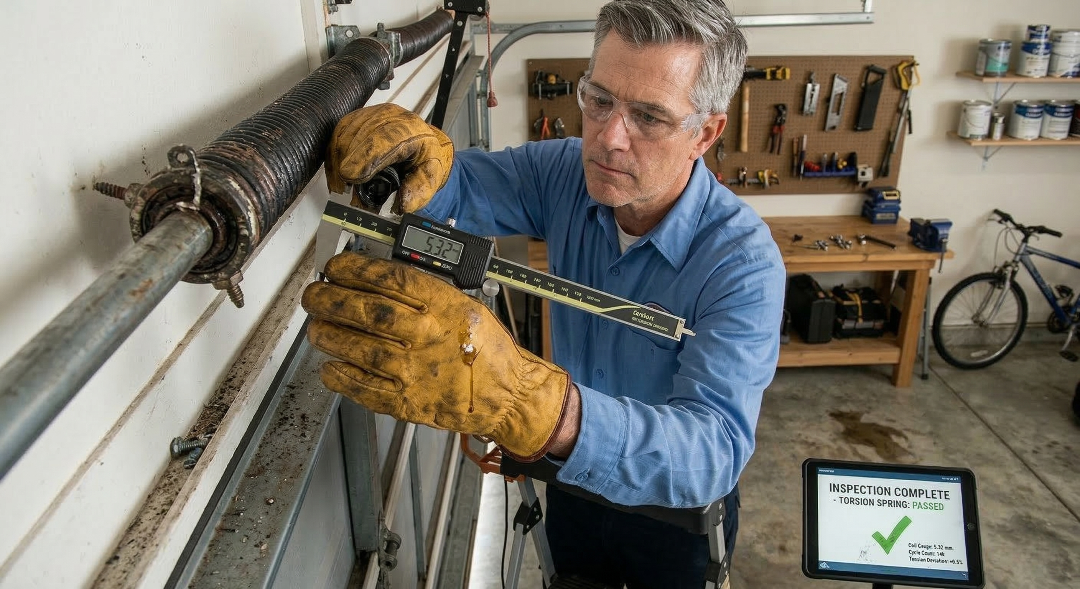
This is the most critical part of the inspection. Garage doors rely on a system of springs and cables to offset their massive weight. Whether you have torsion springs (mounted above the door) or extension springs (mounted along the tracks), these components are under thousands of pounds of tension.
- Spring Fatigue: We look for “gapping” in the coils or visible rust, which indicates the metal is becoming brittle.
- Cable Fraying: We inspect the steel cables for “bird-caging” or broken strands. According to the Consumer Product Safety Commission (CPSC), a snapped cable can cause a door to crash down with enough force to crush a vehicle or cause fatal injury.
- Hardware Tightening: We check the “drums” where the cables wind and the center bearing plates. If these bearings are dry or worn, they create friction that mimics the sound of a dying motor.
3. Dynamic Balance and Force Testing
A perfectly functioning garage door should be “weightless.” During the inspection, our technicians disconnect the automatic opener and operate the door manually. This is the Balance Test. If the door is properly balanced, it should stay in place when lifted halfway up. If it slams shut or shoots upward, the spring tension is incorrect.
We also test the Opener Force Settings. Modern openers have a “brain” that monitors how much work the motor is doing. If the door is too heavy due to poor balance, the motor will overheat. We recalibrate these settings to ensure the motor is only using the minimum force necessary, which significantly extends the lifespan of the gear kit and drive belt.
4. Safety Protocol: The 2×4 and Photo-Eye Test
Safety is mandated by federal law under UL 325 standards. We perform a series of tests to ensure your door is compliant with modern safety requirements:
- The Reversal Test: We place a solid object (like a 2×4 piece of wood) on the garage floor. When the door hits the object, it must reverse instantly.
- Photo-Eye Calibration: We verify that the infrared sensors are mounted no higher than 6 inches above the floor. We check the alignment and wiring to ensure that if a child or pet breaks the beam, the door stops immediately.
- Entrapment Protection: We ensure all wall-mounted push buttons are at least 5 feet high, out of the reach of small children, as recommended by the National Institute of Standards and Technology (NIST).
5. Lubrication and Environmental Sealing
The final phase of a professional inspection is the “tune” portion of the “tune-up.” We apply professional-grade silicone or lithium-based lubricants to all pivot points, hinges, and roller stems. We specifically avoid heavy greases, which trap Chicago road salt and dirt, creating an abrasive paste that grinds down your hardware.
Finally, we inspect the weatherstripping. A cracked bottom seal or a missing side gasket allows the “chimney effect” to pull freezing air into your home, skyrocketing your energy bills. We check for light peeking through the edges of the door, ensuring your garage remains a sealed thermal buffer against the Illinois climate.
Why Professional Expertise Matters in Chicago
While some homeowners attempt a visual check themselves, many of the most dangerous garage door issues are invisible to the untrained eye. A microscopic crack in a winding cone or a slightly frayed cable inside a drum can be the precursor to a catastrophic failure. Professional technicians at EK Garage Door possess the specialized tools, such as tension meters and infrared thermometers, to catch these issues before they become emergency repairs. In a city where the weather is a constant adversary, a documented inspection history also helps maintain your manufacturer’s warranty and can even lower your home insurance premiums by demonstrating a commitment to safety and security.
Schedule Your 29-Point Safety Inspection Today
Don’t wait for a snapped spring to leave your car trapped inside or your home vulnerable to the elements. A professional inspection is a small investment that provides massive returns in safety, energy efficiency, and peace of mind. At EK Garage Door, our Chicago-based specialists provide a detailed report of your door’s health, along with transparent recommendations to keep your system running silently and reliably for years to come. Contact us today at (312) 860-1171 to book your comprehensive inspection, ensuring your home’s largest moving part is as safe as it is functional.