

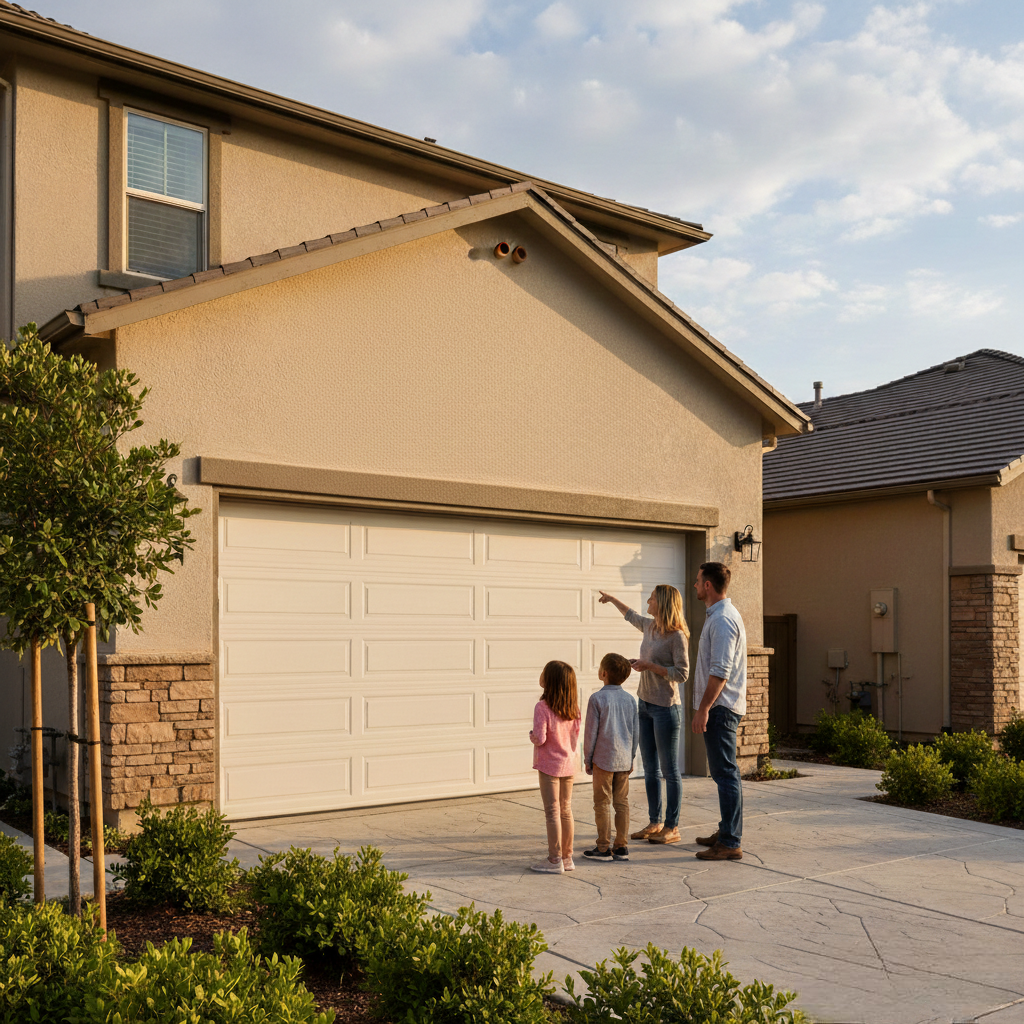
The garage door is the largest and heaviest moving object in your home. For many Chicago families, it serves as the primary entrance, operating several times a day in various weather conditions. While modern garage doors are engineered for convenience, they function under extreme tension and can weigh upwards of 300 pounds. Without proper maintenance and safety awareness, this essential home feature can become a significant liability. At E.K. Garage Door, we believe that safety is the foundation of every service we provide. Understanding the mechanics of your door and implementing a few simple safety habits can prevent the thousands of injuries that occur annually across the country.
The Hidden Dangers: Why Garage Door Safety Matters
Statistics from the U.S. Consumer Product Safety Commission (CPSC) indicate that garage door-related incidents lead to nearly 30,000 injuries every year. These range from minor pinches and lacerations to severe entrapment injuries. In the Chicago metropolitan area, the risk is often heightened by extreme temperature fluctuations. Sub-zero winters can cause metal components to become brittle, while humid summers may lead to wood expansion or sensor misalignment.
A garage door is not a simple wall; it is a complex system of high-tension springs, steel cables, and heavy panels. When one part of this system fails, the result is often sudden and dangerous. Ensuring your family knows how to interact with this “moving wall” is a critical component of home safety.
Essential Safety Features Every Chicago Home Should Have
Since January 1, 1993, federal law has mandated that all residential garage door openers sold in the United States include specific safety mechanisms. If your home features an older system, you may be missing these life-saving technologies.
The Auto-Reverse Mechanism
This feature is designed to detect physical resistance. If a closing garage door strikes an object, be it a trash can, a bicycle, or a pet, the motor is programmed to stop and reverse direction immediately. To verify this feature, place a 2×4 piece of wood or a roll of paper towels in the door’s path. If the door does not reverse upon contact, the force settings are dangerously high and require immediate professional adjustment.
Photoelectric Safety Sensors
Commonly referred to as “photo-eyes,” these sensors are located on either side of the door, no more than six inches above the floor. They project an invisible infrared beam across the opening. If that beam is broken while the door is closing, the system will instantly reverse. According to the National Institute of Standards and Technology (NIST), photoelectric sensors are responsible for eliminating the vast majority of entrapment risks when properly aligned and maintained.
A Homeowner’s Monthly Safety Checklist
Safety is a proactive endeavor. We recommend that Chicago homeowners perform a brief five-minute inspection on the first of every month to ensure their system is in peak condition.
- Visual Inspection: Stand inside the garage with the door closed. Look at the springs, cables, rollers, and pulleys for signs of wear. Look for frayed cables or gaps in the coils of your torsion springs.
- Balance Test: Disconnect the opener by pulling the red emergency release cord and lift the door manually. A well-balanced door should lift easily and stay open about halfway on its own. If it slams shut or “shoots” upward, the springs are out of balance.
- Sensor Check: Ensure the LED lights on your photo-eyes are solid. If they are flickering, they may be misaligned or dirty. Wipe the lenses with a soft cloth to remove Chicago road salt or dust.
- Hardware Tightening: Because garage doors vibrate during operation, bolts and screws can loosen over time. Use a wrench to ensure the tracks and hinges are securely fastened.
For detailed instructions on mechanical safety and maintenance, families can refer to the comprehensive guidelines provided by Iowa State University Extension and Outreach.
Educating Your Children: The “Big Moving Wall” Rules
Children are naturally curious, and to them, a garage door might look like a toy or a racing challenge. It is vital to establish firm household rules regarding the garage.
The Five-Foot Rule: Ensure that all wall-mounted control buttons are at least five feet above the floor, well out of the reach of small children. Remotes should be treated like car keys, stored in a high, secure location rather than left on a car visor in an unlocked vehicle.
Pinch Point Awareness: Modern doors often feature pinch-resistant panels, but older models do not. Teach children never to place their fingers between door sections while the door is moving. Even if the door is opening, the joints can catch fingers with immense force. For a deep dive into building safety codes and child protection standards, visit the International Code Council (ICC).
When to Call a Professional: Knowing Your Limits
While monthly inspections and lubrication are safe for homeowners, certain repairs should never be attempted as a DIY project. The torsion springs, which are typically located above the door, are under enough tension to cause fatal injuries if they snap or are mishandled. Similarly, the bottom brackets and cables are under extreme load and require specialized tools to service.
If you hear a loud “bang” from the garage, see a cable hanging loose, or notice your door is hanging at an angle, do not attempt to move it. Disconnect the power to the opener and call a certified technician immediately. Professionals have the training and equipment to safely manage the high-tension components that make your garage door move.
Schedule Your Professional Safety Inspection Today
Your family’s peace of mind is worth more than the cost of a routine tune-up. At E.K. Garage Door, we specialize in comprehensive 25-point safety inspections for homes across the Chicago area. Our technicians are trained to identify the subtle warning signs of mechanical fatigue that lead to accidents. Whether you need a sensor realignment, a spring tension adjustment, or an upgrade to a modern, smart-connected opener with integrated video monitoring, we are here to ensure your home remains a safe haven. Don’t leave your family’s protection to chance; ensure your “moving wall” is operating at the highest safety standards. Contact us today at (312) 860-1171 to schedule your professional safety check and keep your loved ones secure.