

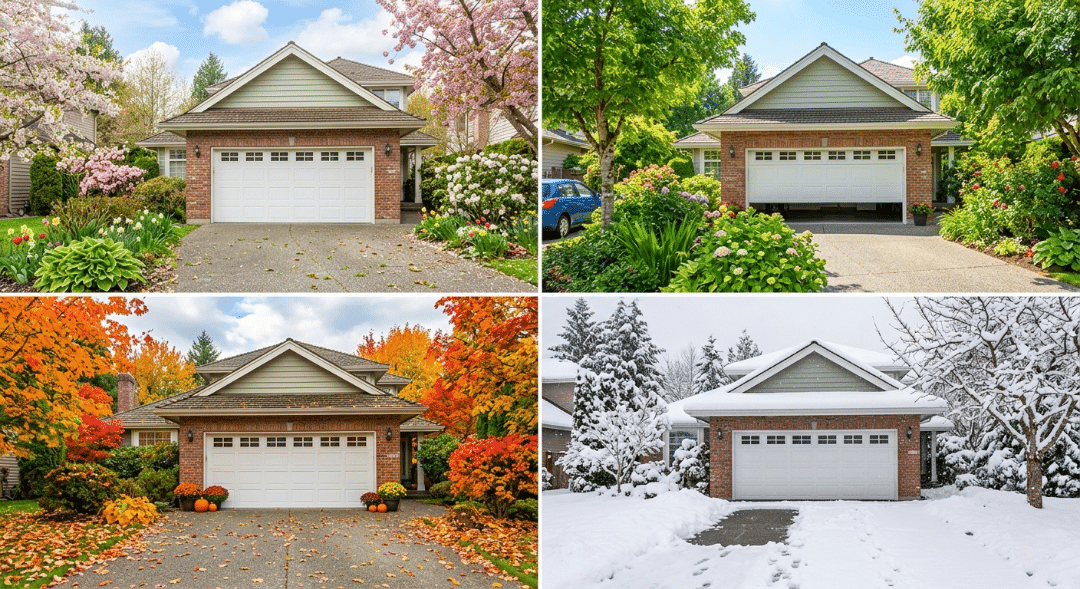
In a city like Chicago, the weather isn’t just a topic of conversation; it’s a force of nature that dictates how we maintain our homes. From the bone-chilling “Polar Vortex” winters to the humid, sweltering summers, the extreme temperature fluctuations of the Midwest place an enormous amount of stress on mechanical systems. Perhaps no part of your home bears this burden more than the garage door. As a massive, moving wall of steel, wood, or aluminum, it expands, contracts, and resists moisture 365 days a year. At EK Garage Door, we understand that a door operating perfectly in October might struggle by January. Understanding these seasonal shifts is the key to preventing costly emergency repairs and ensuring your home remains secure and energy-efficient year-round.
The Winter Impact: Metal Contraction and Lubricant Failure

Chicago winters are notorious for sub-zero temperatures that can wreak havoc on garage door hardware. The primary issue during the cold months is molecular contraction. Metal components, including the heavy-duty torsion springs, steel cables, and tracks, contract when the temperature drops. This contraction can cause the tracks to misalign or the springs to become brittle. In fact, most garage door springs snap during the first major cold snap of the year because the metal loses its elasticity and becomes prone to “fatigue snapping.”
Furthermore, standard lubricants can thicken or “gum up” in extreme cold, turning into a tacky substance that hinders rather than helps movement. This puts an immense strain on your garage door opener’s motor. According to the U.S. Department of Energy, maintaining the mechanical efficiency of home entry points is critical for reducing the overall energy load during peak heating seasons. If your door feels heavier or moves slower in December, it is likely a victim of winter-induced friction.
Spring Thaw: Moisture, Rust, and Foundation Shifts
As the snow melts and the spring rains arrive, a new set of challenges emerges. Moisture is the natural enemy of garage door longevity. For wooden doors, spring can lead to warping or rotting if the sealant has cracked. For metal doors, the primary concern is oxidation. The road salt used on Chicago streets often hitches a ride on your car and ends up on your garage floor. When this salt mixes with spring rain, it creates a corrosive brine that can eat through the bottom weather seal and begin rusting the bottom track and door panels.
Spring also brings shifts in the ground. As the frost heaves out of the soil, your garage floor or driveway may shift slightly. Because garage door tracks are precision-aligned to the millimeter, even a minor foundation shift can cause the door to bind or become “unbalanced.” The National Institute of Standards and Technology (NIST) emphasizes the importance of structural alignment in mechanical systems to prevent premature part failure. A quick professional balance test in the spring can prevent your opener from burning out due to these subtle environmental shifts.
Summer Humidity: Expansion and Sensor Misalignment
When the Chicago humidity hits in July and August, materials begin to expand. This is particularly problematic for the “photo-eye” safety sensors located at the base of your door tracks. The brackets holding these sensors can expand or shift in the heat, leading to misalignment. If your garage door starts to close and then suddenly reverses for no apparent reason, it is often due to the sun’s glare or heat-induced sensor drift.
High humidity also affects the electrical components of your garage door opener. Humidity can lead to condensation inside the motor casing, potentially shorting out circuit boards. Moreover, the heat can cause the wooden frames around the garage opening to swell, increasing the friction the door must overcome to open. Regular inspections during the warmer months ensure that your motor’s force settings are correctly calibrated to handle this seasonal resistance without compromising safety.
Autumn Preparation: The Vital “Pre-Winter” Audit
Autumn is the most critical time for garage door maintenance in Illinois. This is the window of opportunity to fortify your home before the harsh conditions return. A primary focus during the fall should be the weatherstripping. Over time, the rubber seals on the sides and bottom of your door become brittle. If these seals are not pliable, they will not create a “refrigerator-style” seal against the frame, allowing expensive heated air to escape.
As noted by the Office of Energy Efficiency & Renewable Energy, sealing gaps in the “building envelope” is one of the most cost-effective ways to lower utility bills. During an autumn tune-up, a professional technician will also apply a specialized silicone-based lubricant that is rated for low temperatures, ensuring that the moving parts remain fluid even when the mercury drops below zero.
The Critical Role of Professional Calibration
While many homeowners attempt DIY maintenance, the complexity of a garage door system, particularly the high-tension springs, requires professional expertise. A door that is off-balance by just a few pounds can shorten the life of a garage door opener by years. At EK Garage Door, we use specialized tools to measure spring tension and track plumbness, ensuring that the door is optimized for the specific weather patterns of the Chicago area.
Seasonal Maintenance Checklist for Chicago Homeowners:
- Clear the Tracks: Ensure no ice, salt, or debris is built up in the metal tracks.
- Test the Balance: Disconnect the opener and see if the door stays in place mid-travel.
- Inspect the Seals: Look for light peeking through the edges of the door when closed.
- Lubricate correctly: Use only professional-grade sprays; avoid thick grease that traps dirt.
- Check Sensor Alignment: Keep the photo-eyes clean and pointed directly at each other.
Trust EK Garage Door to Protect Your Home Year-Round
Your garage door is a precision instrument that demands respect, especially given the volatile climate of the Great Lakes region. Neglecting seasonal changes doesn’t just lead to annoying squeaks; it leads to structural failures that can compromise your home’s security and your family’s safety. By choosing EK Garage Door, you are partnering with local experts who have spent years navigating the unique architectural and environmental demands of Chicago. We provide comprehensive seasonal tune-ups, emergency repairs, and high-efficiency installations designed to withstand 100-degree summers and sub-zero winters alike.
Secure Your Door Before the Season Shifts
Don’t wait for the next Chicago blizzard or summer heatwave to find out your garage door isn’t up to the task. Proactive maintenance is the most effective way to save money, improve energy efficiency, and ensure your daily routine is never interrupted by a broken spring or a jammed track. Whether you need a pre-winter safety inspection or a spring refresh for your weather seals, the team at EK Garage Door is standing by to provide the expert service you need. Contact us today at (312) 860-1171 to schedule your professional seasonal maintenance and ensure your home is ready for whatever the Chicago weather throws your way.