

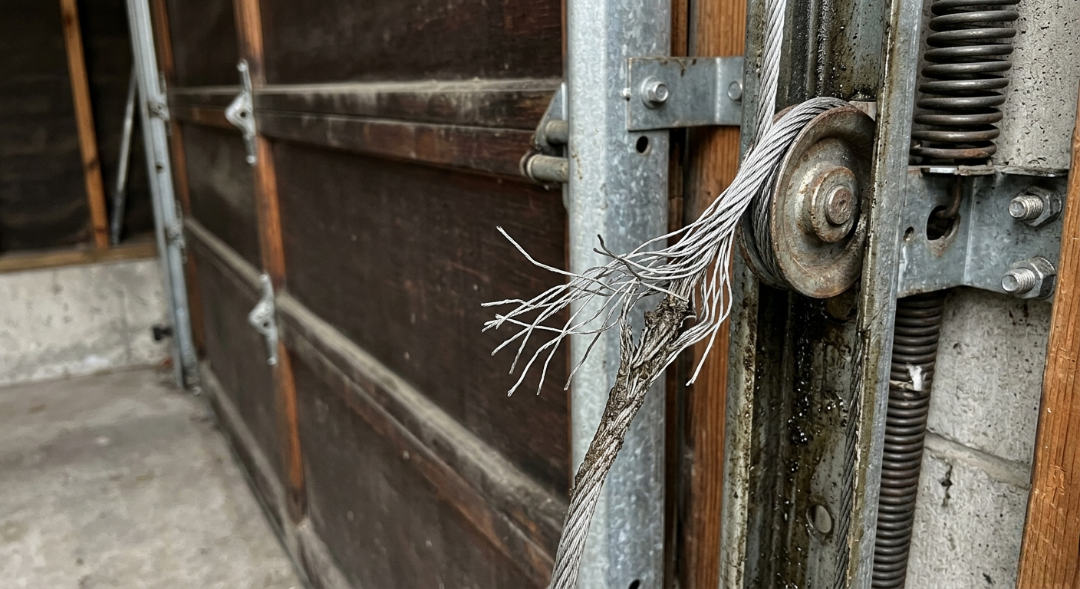
Your garage door is the largest moving object in your home, relying on a complex system of springs, tracks, and cables to operate safely and smoothly. While many homeowners focus on the garage door opener or the tracks when troubleshooting issues, the garage door cables play a critical, heavy-duty role. They bear the intense tension required to lift and lower a door that can easily weigh hundreds of pounds.
Over time, the constant stress and environmental exposure can cause these steel cables to fray. Ignoring a frayed garage door cable is a major safety hazard that can lead to sudden property damage or severe injury. Recognizing the warning signs of cable wear early allows you to address the problem before a catastrophic failure occurs.
Understanding the Role of Garage Door Cables
To appreciate the danger of a frayed cable, it helps to understand how the system works. Garage door cables work in tandem with either torsion springs (mounted above the door) or extension springs (mounted on the sides). When the springs unwind or stretch to lift the door, the cables transfer that massive mechanical energy to the bottom fixtures of the door, pulling it upward.
Because these cables are under extreme, constant tension, even a small amount of physical degradation can compromise the structural integrity of the entire door system. When a cable fails, the remaining components are instantly overloaded, often causing the door to crash down violently.
Top Warning Signs Your Garage Door Cables Are Frayed
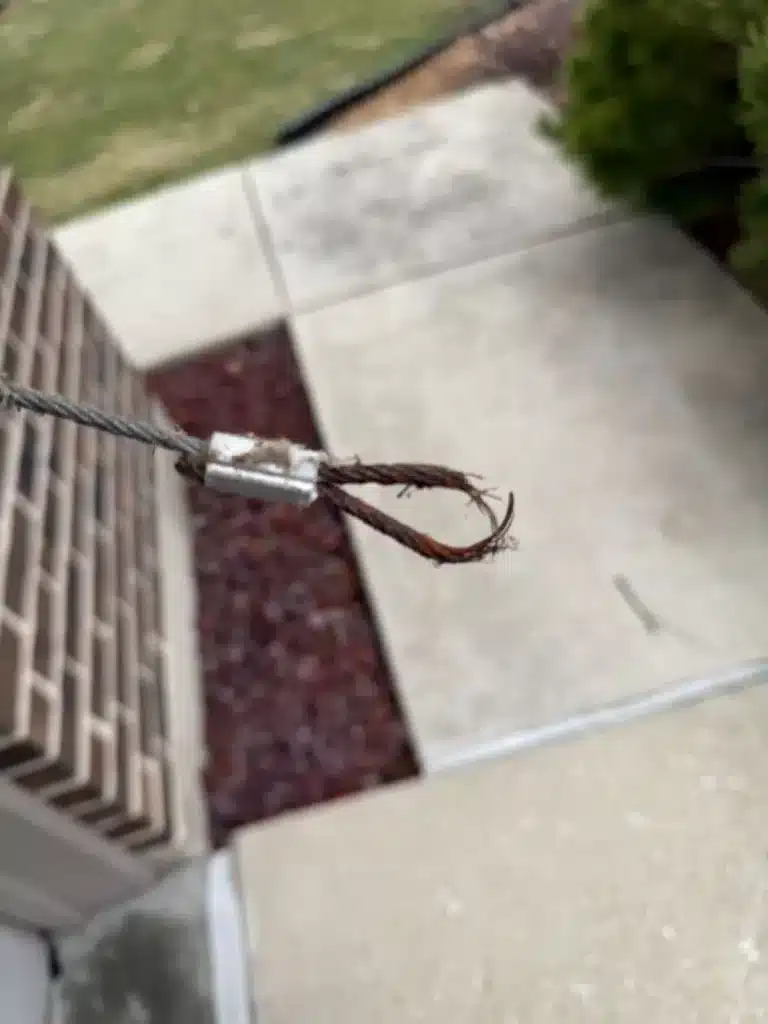
Garage door cables rarely snap without warning. They usually exhibit clear signs of wear and tear over weeks or months. By inspecting your system regularly, you can catch these red flags early.
1. Visible Unraveling or Separating Strands
Most garage door cables are made of multiple strands of galvanized steel wire aircraft cable braided tightly together. When a cable begins to fail, individual strands will break and separate from the main bundle. If you notice loose wires sticking out or a “fuzzy” appearance along the cable, it has begun to fray.
2. A Visibly Crooked or Sagging Door
If one cable stretches or frays more than the other, the tension becomes uneven. This causes the garage door to hang unevenly or look crooked when closing. If you notice one side of the door sagging or leaving a gap at the bottom while the other side touches the ground, a failing cable is a primary suspect.
3. Squeaking, Grinding, or Whining Noises
While garage doors naturally make some noise, a fraying cable often produces distinct sounds. As the broken metal strands rub against the pulleys, drums, or the garage door frame, you may hear an unusual scraping, friction-heavy grinding, or high-pitched squeaking during operation.
4. Excessive Slack in the Cables
When a garage door is fully closed, the cables should be taut. If you look at the sides of your door and notice the cables look loose, limp, or are hanging away from the vertical tracks, they have either stretched out due to fraying or the springs have lost their tension.
5. Jerky or Shaking Movement
A healthy garage door should glide smoothly up and down its tracks. If your door jerks, shakes violently, or pauses momentarily before continuing its cycle, the frayed sections of the cable may be catching on the pulleys or rollers, disrupting the smooth transfer of weight.
The Hidden Dangers of DIY Cable Replacement
When homeowners spot a frayed cable, their first instinct might be to purchase a replacement online and fix it themselves. However, attempting to replace garage door cables without professional training is highly dangerous.
Because the cables are directly attached to the spring system, they are under immense mechanical tension. Loosening the wrong bolt can cause the spring to violently unwind or the cable to snap like a whip. According to data tracked by the U.S. Consumer Product Safety Commission (CPSC), garage door accidents account for thousands of severe injuries every year, including lacerations, fractures, and amputations. Navigating these high-tension components requires specialized tools, precise calibration, and strict adherence to safety protocols.
Proactive Maintenance to Prevent Fraying
While cables will eventually wear out due to old age, regular preventative maintenance can significantly extend their lifespan and keep your home safe.
- Visual Inspections: Dedicate five minutes every month to visually inspect the entire length of your cables, especially near the bottom brackets where moisture and dirt accumulate.
- Keep the System Clean: Wipe away built-up dust, salt, and debris from the cables and tracks to prevent abrasive wear.
- Professional Lubrication: Keep the pulleys and rollers moving smoothly to reduce friction on the cables. Ensure you follow guidelines from engineering institutions like IEEE or manufacturer manuals regarding proper silicone or lithium-based lubricants, as using the wrong grease can attract debris and accelerate wear.
- Schedule Annual Tune-Ups: A professional technician can spot micro-tears in the cable strands that are invisible to the untrained eye and adjust the overall system balance.
Professional Garage Door Repair in Chicago
If you notice any signs of fraying, loose strands, or an unevenly hanging door, do not wait for the cable to completely snap. Protect your family and your property by contacting the experienced team at EK Garage Door. Our certified technicians possess the specialized tools and safety training necessary to safely release system tension, inspect your springs, and replace your worn cables with premium, heavy-duty components. We provide fast, reliable service across the Chicago area to ensure your garage door operates smoothly and securely. Contact us today to schedule your professional safety inspection and door tune-up.