

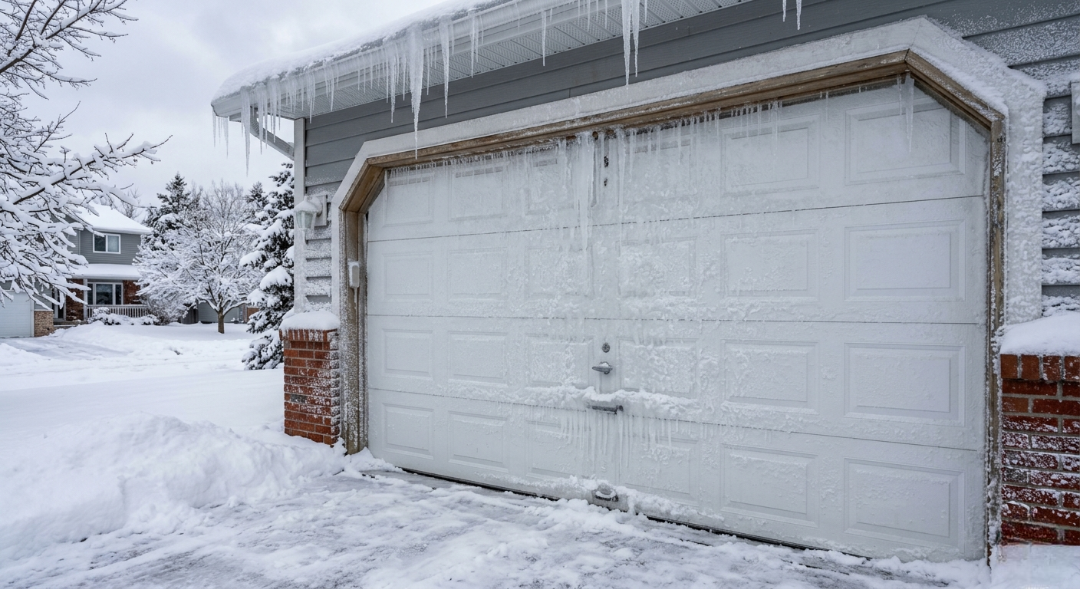
When temperatures in Chicago plunge below zero, your garage door springs are working harder than almost any other component in your home. These heavy-duty steel coils counterbalance the full weight of your door every single time it opens or closes, and the Midwest’s brutal winter swings push that metal to its limits in ways most homeowners never think about until something breaks.
Understanding how cold weather affects garage door springs can help you spot trouble before you are left with a door that will not open on the coldest morning of the year, and it can also help you decide when a spring is simply old versus genuinely dangerous.
Why Metal Becomes Brittle in Extreme Cold
Steel naturally contracts as temperatures drop, and repeated contraction and expansion cycles gradually reduce the metal’s elasticity. A spring that flexed smoothly in July can become noticeably stiffer and more brittle by January, especially once it has already logged several years of daily use.
This is not unique to garage door springs. Any high-tension steel component behaves the same way, which is why bridge engineers and automotive manufacturers also design around cold-weather metal fatigue. Your garage door spring is simply a smaller, more personal version of that same engineering challenge, tucked above a door you rely on every day.
How Long Should a Garage Door Spring Last?
Most residential torsion springs are rated for somewhere between 10,000 and 15,000 open-and-close cycles, which typically translates to roughly seven to twelve years of everyday use for the average household. A garage door that cycles multiple times a day, or one that carries a heavier insulated door, will burn through that rated lifespan faster than a lightly used door on a detached garage. Chicago’s climate compounds this further, since every cold snap adds extra mechanical stress on top of the cycle count itself, effectively aging the spring faster than the calendar alone would suggest.
Torsion vs. Extension Springs in Cold Climates
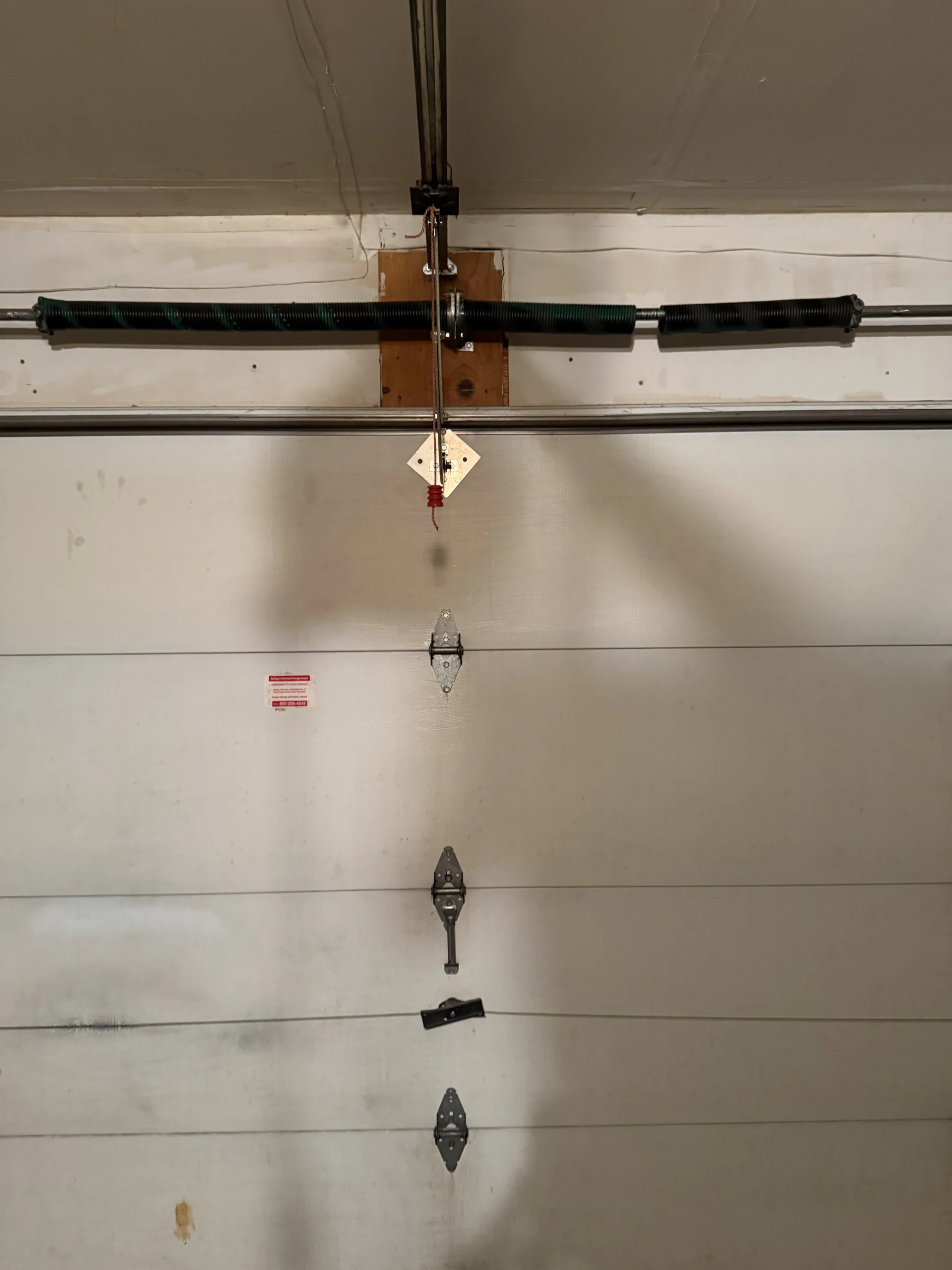
Most modern garage doors use one or two torsion springs mounted horizontally above the door on a metal shaft, a design that distributes tension evenly and tends to hold up somewhat better under temperature swings than older hardware. Many older Chicago homes, particularly those with detached garages built decades ago, still rely on extension springs stretched along the upper tracks on either side of the door. Extension springs generally show cold-weather wear sooner, since they lack the shaft support of a torsion system, and any missing or worn safety cable on an aging extension spring becomes an even greater hazard once the metal turns brittle in January.
Common Cold-Weather Spring Problems in Chicago
Sudden Spring Breakage
The most dramatic cold-weather failure is a spring snapping outright, often accompanied by a loud bang from the garage that can startle an entire household. This typically happens to a spring that was already near the end of its cycle life, with the cold simply providing the final stress needed to fracture the metal at its weakest point.
Increased Tension Strain
Cold, dense air and stiff, thickened lubricant increase the resistance a spring must overcome to lift the door. This added strain accelerates wear on both the spring coils and the opener motor trying to compensate, and it is often the reason an opener that worked fine in autumn suddenly seems underpowered in January.
Ice Buildup Around the Spring Assembly
Moisture from melting snow can drip onto the overhead spring assembly and refreeze, adding weight and interfering with the smooth coiling and uncoiling motion the spring needs to function correctly. Over a full winter, repeated freeze-thaw cycles on the same hardware compound the wear far faster than in a climate-controlled garage.
Warning Signs Your Springs Are Struggling
A spring nearing failure rarely fails without warning. The door often feels unusually heavy when lifted manually, and you may notice a visible gap opening up in the coils of a torsion spring mounted above the track. Some doors begin closing at a noticeable angle instead of sitting flush and level, a sign that one spring is carrying more of the load than the other. A loud popping or banging noise from the garage, even if the door still appears to function afterward, should never be dismissed. Likewise, if the opener motor strains, reverses unexpectedly, or stalls mid-cycle, the spring is very likely no longer providing proper counterbalance.
A Simple Balance Test You Can Perform Safely
With the opener disconnected using the manual release cord, lift the door by hand to roughly waist height and let go. A properly balanced door with healthy springs should stay in place on its own. If it drifts back down or shoots upward, your springs are no longer counterbalancing correctly. This test takes less than a minute, involves no tools, and gives you a clear signal of whether it is time to call for an inspection before the next hard freeze arrives.
How to Protect Your Springs This Winter
Applying a silicone-based lubricant to the springs before the first hard freeze helps the coils move freely and resist moisture. Keeping the garage itself a few degrees warmer, even with basic weatherstripping and door seals, also reduces the temperature swing your springs endure throughout the season. Most importantly, scheduling an annual tension inspection before winter arrives lets a technician catch a weakening spring before it fails on a sub-zero morning, rather than after.
The National Weather Service Chicago office regularly logs sustained sub-zero stretches throughout January and February, conditions that place real, measurable stress on aging garage door hardware across Cook County year after year.
Never Attempt a Spring Repair Yourself
Torsion and extension springs store enormous amounts of energy, even in a door that appears still and undamaged. Attempting to adjust, remove, or replace a spring without the correct tools and training can result in severe injury within a fraction of a second. This is a job strictly for trained technicians who work with these forces daily and carry the specialized winding equipment the repair demands.
Keep Your Springs Winter-Ready with EK Garage Door
Do not wait for a spring to snap on the coldest day of the year. EK Garage Door offers professional garage door spring replacement and spring tension adjustments throughout Chicago and Cook County. Contact us today to schedule a pre-winter inspection and keep your door running smoothly all season long.