

Choosing a new garage door opener involves more than picking a brand name off the shelf. The drive system inside the unit determines how loud it runs, how often it needs maintenance, and how long it will last, especially through a full range of Chicago seasons, from humid summers to sub-zero winter mornings.
The three most common drive types are belt, chain, and screw drive. Each has genuine strengths depending on your garage’s layout and how much noise you are willing to tolerate, and the right choice often comes down to where your garage sits relative to the rooms you sleep and relax in.
Chain Drive Openers
Chain drive openers use a metal chain, similar to a bicycle chain, to pull the trolley along the rail. They are the most affordable option and extremely durable, making them a popular choice for detached garages, workshops, and budget-conscious installations where noise is less of a concern.
The tradeoff is noise. The metal-on-metal operation produces a distinct rattling and grinding sound that can be disruptive if your garage sits beneath or beside a bedroom, and that sound tends to grow louder as the chain stretches slightly over years of use. Periodic tightening and lubrication can extend a chain drive’s smooth operation considerably, though the underlying mechanical noise never fully disappears.
Belt Drive Openers
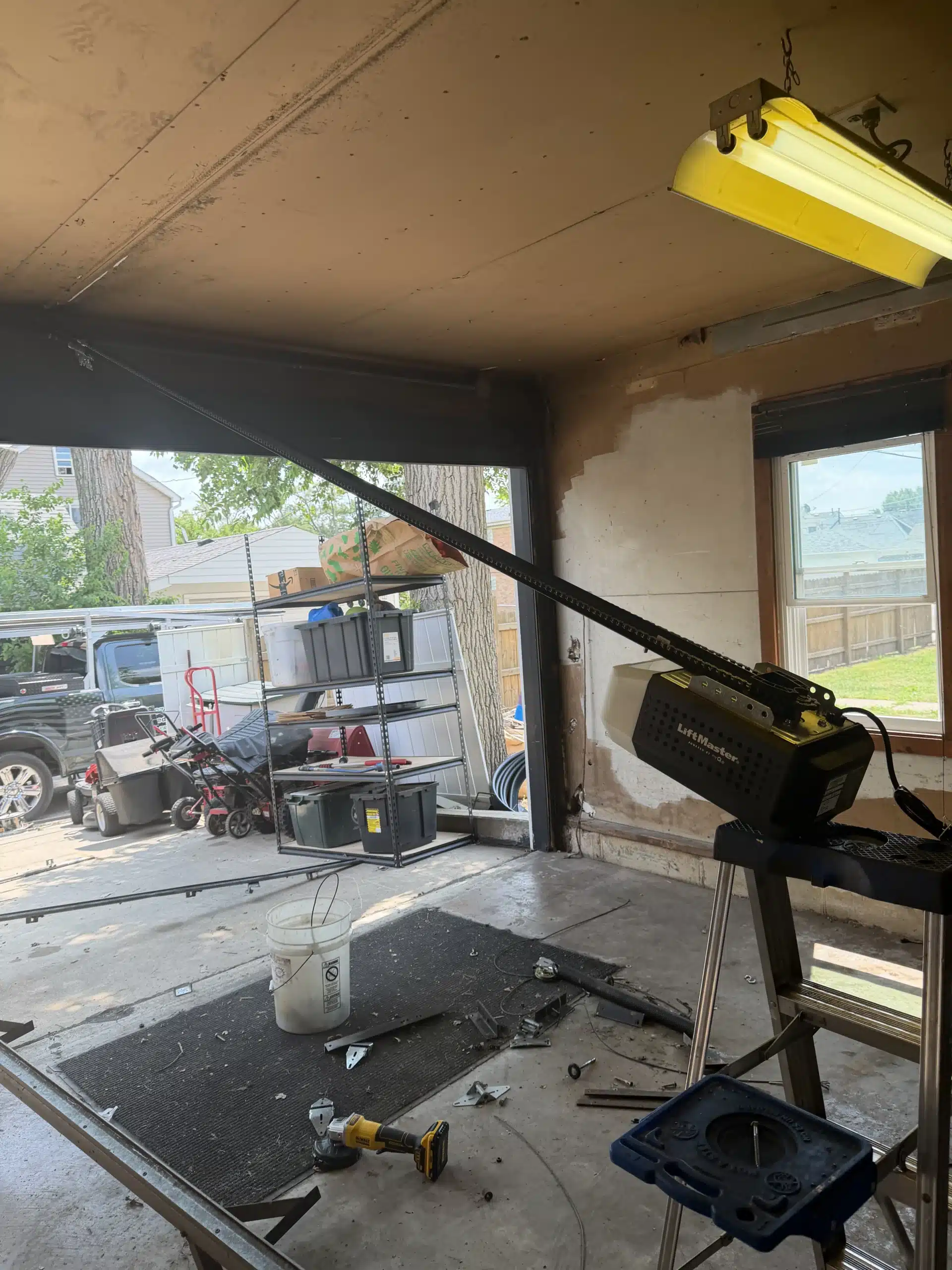
Belt drive openers replace the metal chain with a reinforced rubber belt, resulting in dramatically quieter operation. This makes them the top choice for attached garages, especially homes where the garage sits directly below a bedroom or living space and every late-night arrival matters.
Belt drives typically cost more upfront than chain drives but require less lubrication and produce far less vibration through the door frame, which also means less wear transmitted to the surrounding structure over time. For households with a nursery, a home office, or a light sleeper above the garage, the quieter operation alone often justifies the price difference.
Screw Drive Openers
Screw drive openers use a threaded steel rod to move the trolley, resulting in fewer moving parts than chain or belt systems. This design means less routine maintenance and a smooth, steady operating speed that many homeowners appreciate for its consistency.
However, screw drive performance can be sensitive to temperature extremes. In very cold or very hot conditions, the lubricant on the threaded rod can thicken or thin, sometimes causing the opener to run slightly slower until conditions normalize, a quirk worth knowing about before a Chicago winter arrives. Many owners find this tradeoff acceptable given how little else there is to maintain on the unit.
Vibration and Structural Impact
Beyond noise at the motor itself, each drive type transmits a different amount of vibration into the rail, the mounting brackets, and ultimately the framing above your garage door. Chain drives tend to transmit the most vibration, which over many years can gradually loosen mounting hardware if it is not checked periodically. Belt drives transmit noticeably less, and screw drives fall somewhere in between, since the rigid threaded rod moves smoothly but is bolted directly to a stationary rail rather than floating on a chain loop.
Torque and Horsepower Considerations
Drive type is only one half of the performance equation. The opener’s horsepower or torque rating determines whether it can comfortably lift your specific door, and this matters just as much for a heavy insulated door as the drive mechanism itself. A single-car door typically needs less lifting power than a heavier double-wide door, and pairing an underpowered unit with a heavy insulated door, regardless of whether it uses a belt, chain, or screw drive, will shorten its lifespan and strain the motor on every single cycle.
Compatibility with Smart Openers
It is a common misconception that quiet, smart-home-ready openers are only available with belt drives. In reality, all three drive types are now offered with WiFi connectivity, smartphone app control, and battery backup options across most major manufacturers. Your choice of chain, belt, or screw drive should be based on noise tolerance, budget, and mounting logistics, not on which units happen to support smart features, since that distinction has largely disappeared from the current opener market.
Side-by-Side Comparison
| Drive Type | Noise Level | Maintenance | Best For |
| Chain Drive | Loudest | Moderate (needs lubrication) | Detached garages, budget installs |
| Belt Drive | Quietest | Low | Attached garages near living spaces |
| Screw Drive | Moderate | Low | Fewer moving parts, steady speed |
Factoring in Cost Over Time
Chain drives typically carry the lowest upfront price, while belt drives sit at the premium end due to their reinforced materials and quieter engineering. Screw drives usually fall in the middle. It is worth thinking beyond the sticker price, though, since a belt drive’s reduced maintenance needs and longer effective lifespan can offset its higher initial cost over a decade or more of daily use.
Which Drive Type Is Right for Your Chicago Home?
If your garage is attached and you value a quiet household, a belt drive is almost always worth the extra investment. If your garage is detached from the home or you are working within a tighter budget, a chain drive remains a dependable, long-lasting workhorse that has stood the test of time. A screw drive is a solid middle-ground choice for homeowners who want low maintenance without the premium price tag of a belt system, particularly in a garage with a straight, unobstructed rail run. A newer subdivision home with an attached three-car garage calls for a very different answer than a century-old bungalow with a detached garage off the alley, and a technician familiar with both settings can help you weigh the tradeoffs for your specific layout.
Installation and Setup Considerations
Whichever drive type you choose, proper installation has a bigger impact on long-term performance than the mechanism itself. Rail alignment, correct chain or belt tension, and accurate travel-limit calibration all determine whether the opener runs smoothly or develops premature wear. A belt drive installed with a misaligned rail can end up noisier than a well-installed chain drive, which is why professional setup matters just as much as the drive type you settle on.
Let EK Garage Door Help You Choose
Not sure which drive system fits your garage and lifestyle? EK Garage Door provides expert garage door opener installation throughout Chicago and Cook County, matching you with the right belt, chain, or screw drive system for your home. Contact us today for a personalized recommendation.