

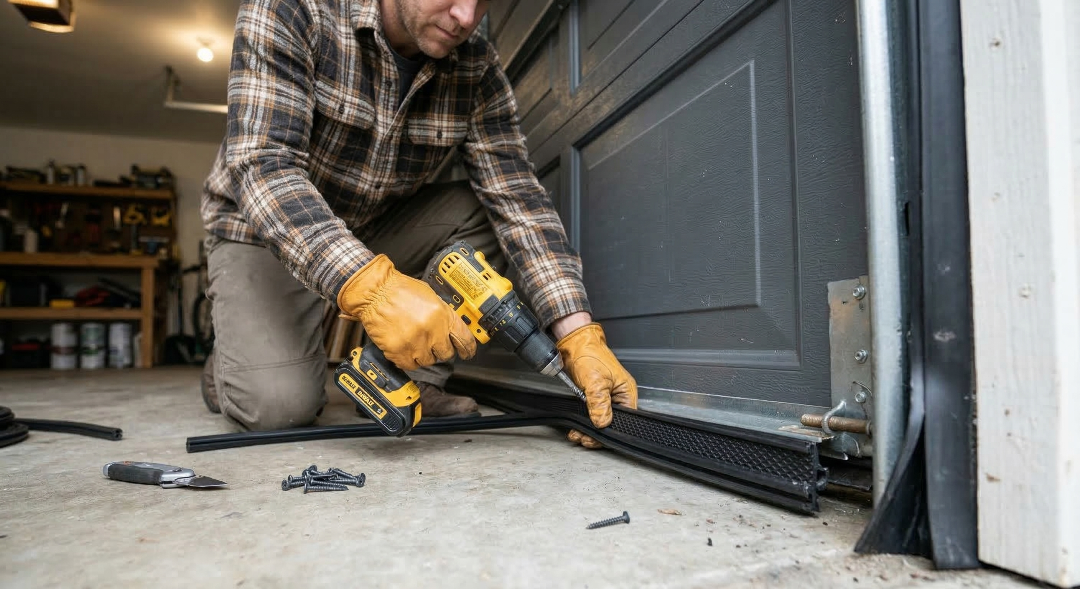
In a city like Chicago, where the wind chill can drop temperatures to sub-zero levels in a matter of hours, homeowners are well-versed in the importance of insulation. We upgrade our attics, invest in triple-pane windows, and seal our front doors. Yet, the largest “opening” in the home, the garage door, is often left with gaps that act as a thermal vacuum. At EK Garage Door, we have seen that even the most expensive insulated garage door is only as effective as its seals. Professional weatherstripping is the critical finishing touch that transforms a garage from a drafty storage space into a true thermal barrier, protecting both your comfort and your wallet.
The Science of Air Infiltration and the “Chimney Effect”
To understand why weatherstripping matters, one must understand how air moves through a home. This is often referred to as the “stack effect” or “chimney effect.” In the winter, warm air rises and escapes through the top of the house, creating a vacuum that sucks cold air in through any available gap at the bottom, most notably, the base and sides of your garage door.
Research from the U.S. Department of Energy indicates that air leaks can account for up to 30% of a home’s heating and cooling energy loss. In an attached garage, this unconditioned air doesn’t just stay in the garage; it presses against the shared interior walls and seeps into the living spaces above. By installing high-quality weatherstripping, you are essentially “corking the bottle,” stopping the uncontrolled airflow that forces your furnace to work overtime.
Protecting Your Home’s Structural Integrity
Weatherstripping is more than just a temperature regulator; it is a primary defense against moisture. Chicago’s “freeze-thaw” cycles create a constant cycle of melting snow and ice. Without a proper bottom seal or threshold gasket, this moisture can seep under the door and freeze. Not only can this cause your garage door to freeze shut, potentially damaging the opener when you try to use it, but it also invites wood rot and concrete spalling.
According to studies on moisture and water damage prevention, standing water and humidity in a garage are the leading causes of mold growth in shared wall cavities. High-grade EPDM rubber seals create a watertight barrier that directs runoff away from the garage interior, protecting your drywall, your vehicles, and the structural lumber of your home’s frame.
Choosing the Right Materials for the Chicago Climate
Not all weatherstripping is created equal, especially when facing Midwest winters. At EK Garage Door, we emphasize the use of materials that maintain flexibility in extreme temperatures.
- EPDM Rubber: Unlike standard vinyl, EPDM (ethylene propylene diene monomer) rubber is designed to withstand temperatures from -40°F to 300°F. It won’t crack or become brittle when the “Windy City” gusts hit.
- Silicone-Based Seals: For homeowners looking for the ultimate seal, silicone stays pliable even in the deepest freezes, ensuring a “refrigerator-style” fit against the door jamb.
- Vinyl Stop Molding: Often used on the sides and top of the door, this features a flexible flap that creates a physical barrier against wind-driven rain and snow.
Data from the National Institute of Standards and Technology (NIST) suggests that using materials rated for extreme thermal cycles can extend the lifespan of your seals by up to 10 years, compared to budget foam tapes that often fail after a single season.
The Economic Impact: Lowering Your Utility Bills
The return on investment (ROI) for garage door weatherstripping is among the highest in home improvement. While the upfront cost is modest, the long-term savings are substantial. Homeowners with attached garages often see a reduction of 10% to 15% in their monthly heating bills after sealing the garage perimeter.
This is because a sealed garage acts as a “buffer zone.” An unsealed garage might stay at 20°F during a cold snap, but a professionally weatherstripped and insulated garage can remain 20°F to 30°F warmer than the outdoor air. This drastically reduces the temperature gradient between the garage and your kitchen or mudroom, meaning your heating system doesn’t have to fight as hard to maintain a comfortable 70°F inside.
Beyond Energy: Pest Prevention and Noise Reduction
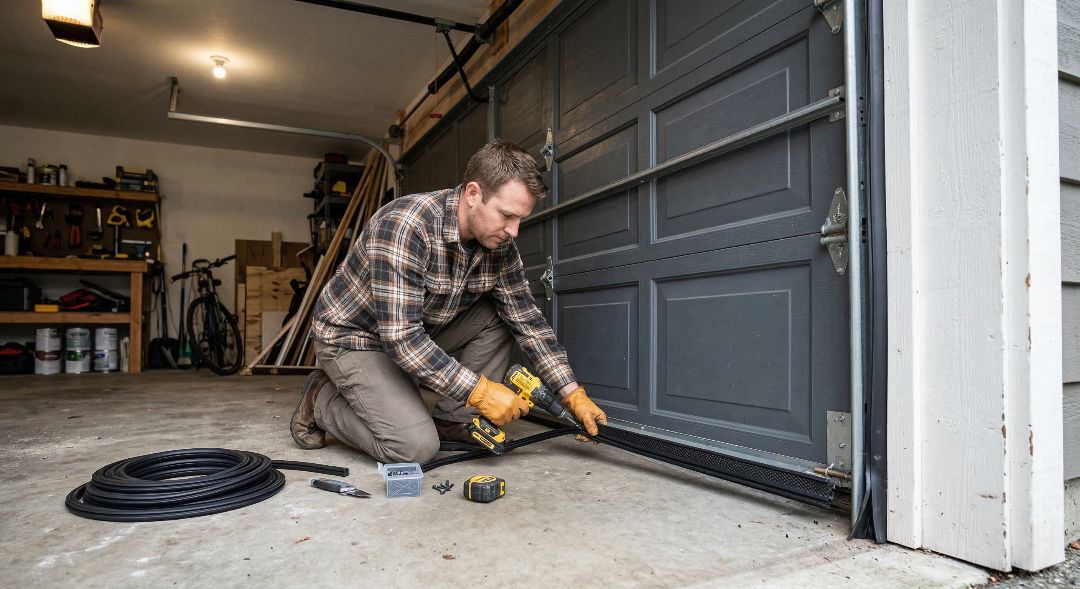
An overlooked benefit of a tight garage seal is the exclusion of unwanted guests. As temperatures drop, rodents and insects seek warmth, and even a 1/4-inch gap at the corner of a garage door is enough for a mouse to enter. EK Garage Door utilizes heavy-duty bottom seals and brush seals that are specifically designed to deter pests by closing the “gaps of opportunity” that common doors leave open.
Additionally, weatherstripping provides an excellent sound dampening effect. For Chicago residents living near the “L” train, busy intersections, or flight paths, the added density of professional seals can significantly reduce the transmission of street noise into the home.
The Importance of Professional Calibration
Installing weatherstripping is more complex than simply sticking tape to a frame. If the side seals are too tight, they increase friction on the door, which can cause the opener to burn out or the door to reverse unexpectedly. Conversely, if they are too loose, the energy-saving benefits are lost.
Our technicians at EK Garage Door perform a full system calibration with every seal replacement. We ensure that the door’s “limit settings” are adjusted so the door seats firmly against the threshold without over-compressing the rubber, which can lead to premature wear. We also check the balance of the door to ensure that the added seal friction hasn’t compromised the safety of the auto-reverse mechanism, a standard regulated by the Consumer Product Safety Commission (CPSC).
Optimize Your Chicago Home’s Thermal Shield Today
Don’t let your hard-earned money escape through the gaps in your garage door this winter. Weatherstripping is the most cost-effective way to improve your home’s energy efficiency, protect your property from moisture, and keep pests at bay. At EK Garage Door, we specialize in high-performance sealing solutions tailored specifically for the harsh Chicago climate. Our expert team will assess your door’s perimeter, threshold, and joints to provide a custom sealing plan that pays for itself in lower utility bills and increased comfort. Contact us today at (312) 860-1171 to book your energy-efficiency audit, start saving on your energy bills before the next cold front arrives.